PSV 2028: The Payments Revolution That Could Transform Nigeria’s Economy
2 months ago 0
Nigeria’s ambition to build a $1 trillion economy extends beyond fiscal reforms, infrastructure development and macroeconomic stability. Increasingly, the efficiency of the country’s payment ecosystem is emerging as a critical driver of economic growth, financial inclusion and digital transformation. With the unveiling of the Central Bank of Nigeria’s Payment System Vision (PSV) 2028, attention has shifted to how the ambitious blueprint could redefine banking, fintech, commerce and the broader financial landscape. This analysis examines the far-reaching implications of the initiative, the opportunities it presents and the implementation challenges that will determine whether it becomes a catalyst for Nigeria’s economic transformation.
Excerpts: Payments remain the lifeblood of commerce. Every business transaction, government revenue collection, salary payment, tax remittance, export receipt and consumer purchase depends on the efficiency of the country’s payment ecosystem.
Recognising this reality, the Central Bank of Nigeria (CBN) has unveiled the Payment System Vision (PSV) 2028, a strategic framework designed to reposition Nigeria as one of Africa’s leading digital payment economies while supporting the Federal Government’s broader ambition of building a $1 trillion economy.
Unlike previous payment system roadmaps that focused primarily on expanding electronic payments, PSV 2028 is a far more ambitious undertaking. It seeks to create a resilient, secure, innovative and globally competitive payments ecosystem capable of supporting commerce, attracting investment, promoting financial inclusion and strengthening Nigeria’s position within Africa’s rapidly evolving digital economy.
Yet, while industry stakeholders have largely welcomed the vision as timely and transformative, they are equally unanimous that its success will not be determined by the elegance of the document but by the discipline of its execution.
More Than a Payments Strategy
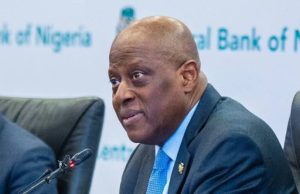
Unveiling the framework, CBN Governor, Olayemi Cardoso, described PSV 2028 as “a Nigerian project” rather than simply another regulatory initiative.
According to him, the vision is designed to build a payment ecosystem that is secure, trusted, inclusive and globally competitive, one capable of driving economic prosperity and improving the quality of life of Nigerians.
His message was unmistakable: PSV 2028 is not merely about processing transactions faster. It is about creating the financial infrastructure required for sustained economic transformation.
That distinction is significant. Around the world, payment systems have evolved from being banking utilities into strategic national infrastructure. Countries with efficient payment systems attract greater investment, stimulate innovation, reduce business costs and improve public sector efficiency. Nigeria is now attempting to join that league.
Why PSV 2028 Matters
The timing of the initiative is hardly accidental. Nigeria’s digital economy continues to expand rapidly. Electronic transactions have grown exponentially over the past decade.
Fintech companies now rank among Africa’s fastest-growing technology firms.
Millions of Nigerians increasingly depend on mobile banking, instant transfers, QR payments and digital wallets for daily commercial activities.
Yet significant challenges remain. Payment fraud continues to evolve. Cybersecurity threats are becoming increasingly sophisticated. Financial exclusion still affects millions of Nigerians.
Interoperability gaps persist in parts of the financial ecosystem. Rural communities continue to experience limited access to digital financial services. PSV 2028 seeks to confront these structural weaknesses while preparing Nigeria for the next generation of digital finance.
Building the Infrastructure of a $1 Trillion Economy
One of the strongest endorsements of PSV 2028 came from the Director-General of the Securities and Exchange Commission (SEC), Emomotimi Agama, who argued that Nigeria’s payment infrastructure should be viewed as an engine of economic development rather than merely a platform for transferring money.
According to Agama, payment systems should facilitate wealth creation, capital formation and investment while supporting Nigeria’s aspiration to become a $1 trillion economy.
His position reflects an increasingly accepted global economic principle: no modern economy can achieve sustainable growth without efficient financial infrastructure.
When businesses receive payments instantly, reconcile transactions seamlessly and access digital financial services with ease, productivity rises.
When governments collect revenues electronically, leakages decline. When investors operate within predictable and efficient payment ecosystems, confidence improves.
PSV 2028 therefore represents far more than financial sector reform. It is economic reform.
Banks Face a New Competitive Reality
Perhaps nowhere will PSV 2028 have greater impact than within Nigeria’s banking industry. Commercial banks no longer compete only with one another.
Their competitors now include fintech companies, payment service banks, mobile money operators, embedded finance providers and technology firms.
PSV 2028 encourages greater innovation while simultaneously demanding stronger collaboration.
Banks will be expected to invest more aggressively in artificial intelligence, cloud computing, digital identity systems, cybersecurity, open banking frameworks and API-driven financial services.
Fintech firms, on the other hand, stand to benefit from a more coordinated regulatory environment capable of supporting innovation while strengthening consumer confidence.
The future payments ecosystem is therefore unlikely to be defined by rivalry alone. Partnerships will become increasingly important.
Financial Inclusion Moves to the Centre
Perhaps the most socially significant objective of PSV 2028 is financial inclusion.
Governor Cardoso has projected that Nigeria could achieve 95 per cent financial inclusion by 2028, a target that would bring millions of previously excluded Nigerians into the formal financial system.
For many analysts, this may become the initiative’s greatest legacy. Financial inclusion extends beyond opening bank accounts.
It enables access to savings, insurance, pensions, credit, investments and digital commerce. For small businesses, financial inclusion improves access to financing.
For households, it strengthens economic resilience. For governments, it enhances transparency while expanding the tax base.
If successfully implemented, PSV 2028 could significantly narrow the financial exclusion gap that has persisted despite years of reforms.
Cash-Lite Policy Begins to Show Results
Recent monetary data suggest that Nigeria’s transition towards a digital payments ecosystem is already gathering momentum.
Latest figures released by the Central Bank of Nigeria show that currency in circulation declined to N5.52 trillion in June 2026 from N5.69 trillion in May, representing a monthly reduction of N166.68 billion. More significantly, currency held outside the banking system dropped to N4.92 trillion from N5.19 trillion, indicating that more cash is returning to regulated financial institutions as electronic payment adoption continues to expand.
The trend is particularly noteworthy because it coincides with the launch of the Payment System Vision (PSV) 2028. While currency in circulation remains 10.3 per cent higher than the N5.01 trillion recorded in June 2025, reflecting continued growth in overall liquidity, the monthly decline suggests that the CBN’s cash-lite initiatives are beginning to influence payment behaviour.
The apex bank’s strategy extends beyond reducing physical cash usage. Under PSV 2028, the CBN aims to lower the proportion of currency circulating outside the banking system to below 40 per cent by 2028, while increasing financial inclusion to 95 per cent of Nigeria’s adult population and deploying more than 10 million QR code and tap-to-pay acceptance points across markets, transport hubs, commercial centres and rural communities.
The moderation in cash outside banks has also occurred alongside continued expansion in domestic liquidity, with broad money supply rising to N133.25 trillion in June from N129.21 trillion in May despite the Central Bank’s tight monetary policy stance. This suggests that Nigeria’s payment ecosystem is becoming increasingly digital rather than cash-dependent, reinforcing the strategic objectives outlined under PSV 2028.
This insertion complements the existing analysis naturally, providing current empirical evidence that supports the article’s broader argument about the transformative potential of the CBN’s Payment System Vision 2028.
NIBSS: Payment Systems Are Now Economic Infrastructure
Industry infrastructure provider Nigeria Inter-Bank Settlement System (NIBSS) has equally welcomed the framework, describing payment infrastructure as one of the most critical foundations of modern economic activity.
According to NIBSS, digital payment rails are no longer simply mechanisms for moving money between bank accounts.
They now support e-commerce, transportation, healthcare, education, government services and virtually every sector of the digital economy.
This observation underscores why investment in payment infrastructure increasingly attracts the same strategic importance once reserved for roads, railways, ports and power infrastructure.
Lower Costs, Greater Productivity
Businesses stand among the biggest potential beneficiaries. Manufacturers could experience improved cash flow.
Retailers could reconcile payments more efficiently. SMEs could receive customer payments instantly while reducing transaction costs.
Exporters could benefit from improved cross-border settlements. Consumers would enjoy faster, safer and more convenient payment experiences. Collectively, these efficiencies improve productivity across the economy.
Lower transaction costs ultimately translate into increased competitiveness.
AfCFTA and Cross-Border Trade
One of PSV 2028’s strategic objectives is strengthening Nigeria’s position within Africa’s emerging digital payments ecosystem.
As implementation of the African Continental Free Trade Area (AfCFTA) gathers momentum, efficient cross-border payment infrastructure will become increasingly important.
Today, many African businesses continue to face high transaction costs, currency conversion delays and fragmented payment systems.
PSV 2028 seeks to position Nigeria to benefit from the continent’s growing digital trade opportunities.
If effectively implemented, Nigerian exporters, fintech companies and service providers could gain easier access to African markets.
Cybersecurity Becomes Non-Negotiable
Every advancement in digital payments inevitably attracts more sophisticated cyber threats. Fraudsters continue to develop increasingly complex attack methods.
This explains why cybersecurity occupies a central position within PSV 2028.
The framework places strong emphasis on fraud prevention, operational resilience, consumer protection and cyber risk management. Without trust, digital payment adoption cannot be sustained.
Consumers must remain confident that their money and personal information are secure.
Investors Are Watching
Beyond the banking industry, investors are paying close attention. A successfully implemented PSV 2028 could unlock billions of naira in new investments across financial technology, cloud computing, cybersecurity, payment gateways, digital identity solutions and financial infrastructure.
It could equally strengthen Nigeria’s position as Africa’s preferred fintech investment destination.
International investors increasingly evaluate countries based on the quality of their digital infrastructure. Efficient payment systems improve overall ease of doing business.
Execution Remains the Biggest Test
Despite widespread industry optimism, experts caution that implementation remains the greatest challenge.
Legal and regulatory analysts argue that achieving the objectives of PSV 2028 will require policy consistency, continuous investment in digital infrastructure, effective stakeholder collaboration and sustained regulatory oversight.
Interoperability must improve. Consumer protection must remain robust. Cybersecurity standards must continue to evolve. Innovation must not outpace regulation.
Perhaps most importantly, collaboration among banks, fintech companies, telecommunications operators, payment service providers and regulators must remain stronger than competition.
History shows that ambitious policy frameworks often falter during execution. PSV 2028 cannot afford that fate.
A Defining Moment for Nigeria’s Digital Future
Few policy documents possess the potential to reshape an economy as profoundly as PSV 2028. If fully implemented, the framework could redefine how Nigerians transact, how businesses operate, how governments collect revenues and how investors perceive Africa’s largest economy.
It could deepen financial inclusion, stimulate innovation, reduce transaction costs, strengthen investor confidence and accelerate Nigeria’s transition toward a digitally enabled economy.
As Governor Cardoso aptly observed, PSV 2028 is not simply a Central Bank initiative.
It is a national project. Its ultimate success, therefore, will not be measured by the publication of an ambitious vision document, but by whether, in 2028, Nigerians can genuinely say that paying, saving, investing and doing business have become faster, safer, cheaper and more inclusive than ever before.
For Nigeria, the journey to a globally competitive digital economy may well begin with something as simple and as powerful as transforming the way money moves.