Food inflation falls to 19.57% after six months of increases
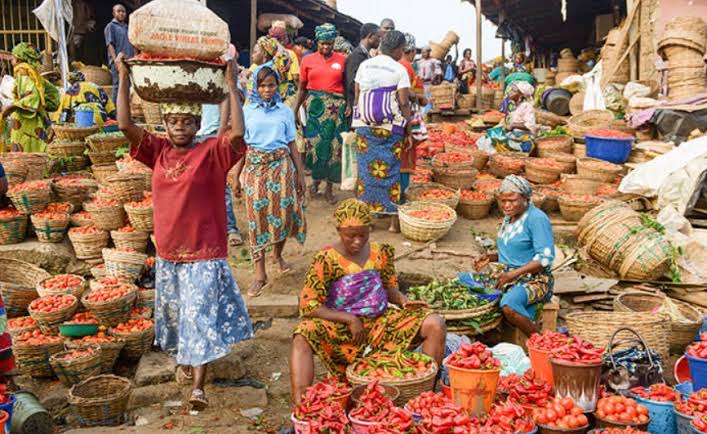
Nigeria’s food inflation rate fell to 19.57 per cent in August 2026, marking its first decline in six months and offering some relief to households after five consecutive months of accelerating food price pressures.
The latest Consumer Price Index (CPI) released by the National Bureau of Statistics (NBS) showed that food inflation dropped by 0.74 percentage points from 20.31 per cent in July. It was also 5.73 percentage points below the 25.30 per cent recorded in August 2025.
The moderation ended a steady increase in food inflation that began in March. The rate rose from 8.89 per cent in January to 12.12 per cent in February, 14.31 per cent in March, 16.06 per cent in April, 16.96 per cent in May, 17.52 per cent in June and 20.31 per cent in July before easing in August.
More significantly for households, the month-on-month food inflation rate slowed sharply to 1.02 per cent in August from 5.56 per cent in July. The 4.54 percentage-point reduction means food prices continued to rise during the month, but at a considerably slower pace.
The NBS attributed the moderation to changes in the average prices of several food items, including palm oil, carrots, pepper, onions, cassava flour, beef, yam flour, water yam, melon, fresh ginger, fish, Irish potatoes, wheat grain, frozen chicken and turkey.
Despite the improvement, food remains the single biggest driver of Nigeria’s inflation, accounting for 6.16 percentage points of the year-on-year headline inflation rate in August.
That contribution was substantially higher than restaurants and accommodation services at 1.99 percentage points, transport at 1.64 points and housing, water, electricity, gas and other fuels at 1.30 points.
The figures highlight the continuing pressure on household budgets, particularly for lower-income Nigerians who devote a larger share of their earnings to food and other necessities. A moderation in food inflation therefore signals slower price increases, rather than a reversal in the cost of living.
The impact also varies significantly across the country. Adamawa recorded the highest annual food inflation at 38.85 per cent, followed by Zamfara at 37.96 per cent and Bayelsa at 36.20 per cent.
At the other end of the scale, Borno recorded food deflation of 4.04 per cent, while Jigawa recorded 0.23 per cent deflation. Kebbi posted one of the lowest positive rates at 3.47 per cent.
Every month, Katsina recorded the highest food inflation at 9.48 per cent, followed by Rivers at 8.86 per cent and Osun at 8.32 per cent. Taraba recorded the sharpest decline at 12.42 per cent, followed by Borno at 12.15 per cent and Bauchi at 8.88 per cent.
The NBS cautioned against direct comparisons between states because consumption patterns and the relative weights assigned to different food and non-food items vary across locations.
Nigeria’s headline inflation also eased marginally to 15.39 per cent in August from 15.43 per cent in July, while month-on-month headline inflation fell to 0.71 per cent from 1.57 per cent.
The latest food inflation reading therefore provides an early sign that price pressures may be moderating, but the improvement remains fragile. With food still the largest contributor to overall inflation and several states recording significantly higher price increases, sustained gains will depend on stronger domestic food production, better transport and storage infrastructure and lower costs across the agricultural supply chain.
For millions of Nigerian households, the real test will be whether the slowdown in food inflation is sustained long enough to translate into more predictable food bills and a meaningful improvement in purchasing power.
About The Author