Nigeria advances $2bn satellite programme as space infrastructure investment nears contract stage
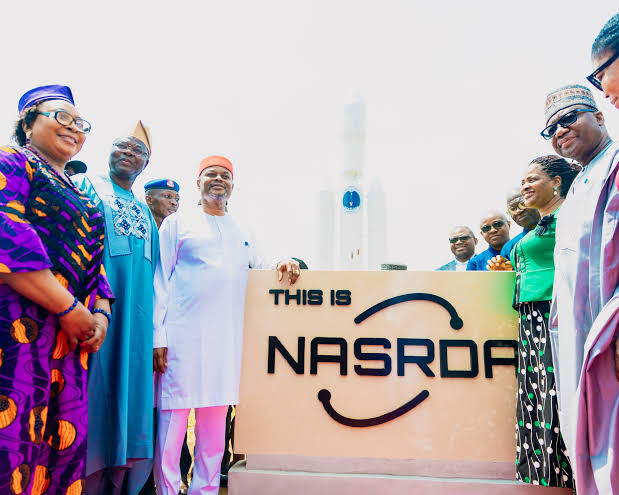
Nigeria’s $2 billion satellite procurement programme has reached 95 per cent completion, bringing the country closer to a major investment in communications, Earth observation and domestic space technology aimed at strengthening digital infrastructure and reducing dependence on ageing satellite assets.
Director-General of the National Space Research and Development Agency (NASRDA), Professor Matthew Adepoju, disclosed this in Abuja on Friday, saying formal agreements with foreign technical partners are expected to be signed as the procurement moves into its final stage.
The programme covers six satellites, including three optical Earth-observation satellites, a Synthetic Aperture Radar satellite and two communications satellites, NIGCOMSAT-2A and NIGCOMSAT-2B.
The scale of the investment makes it significant not only for Nigeria’s space programme but also for the wider digital economy. Improved satellite capacity can support broadband connectivity, telecommunications, broadcasting, mapping, agriculture, environmental monitoring and other services in areas where terrestrial infrastructure remains limited.
Adepoju said the new Earth-observation satellites would provide high-resolution imaging, including sub-metre optical resolution and one-metre to sub-metre radar capability.
The communications satellites are expected to strengthen Nigeria’s satellite communications capacity and expand connectivity beyond what is currently available through the ageing NIGCOMSAT-1R, launched in 2011.
For businesses and households, additional satellite capacity could improve the resilience and reach of communication services, particularly in underserved and remote locations. Better connectivity also provides infrastructure for digital financial services, education, healthcare, e-commerce and other technology-driven economic activities.
The programme is also intended to deepen Nigeria’s participation in the global space industry. Adepoju said a new Assembly, Integration and Testing Laboratory would be developed to enable local assembly, integration and testing of future satellites.
The facility is expected to move from contract signing to commissioning within 18 months, potentially giving Nigerian engineers and researchers greater access to practical satellite-development capabilities.
The local component is economically important because a major satellite programme can generate value beyond the purchase of spacecraft. It can create opportunities for technology transfer, engineering services, research, software development, equipment maintenance and other supporting industries.
The government is working with international technology companies on the communications component, including Israel Aerospace Industries, France-based Thales Alenia Space and China Great Wall Industry Corporation.
NIGCOMSAT-2A and 2B were approved by the Federal Executive Council in August as part of efforts to expand broadband coverage and strengthen critical communications infrastructure.
The new investment also comes as Nigeria accelerates its digital broadcasting programme through the nationwide Digital Switch-Over initiative, which combines terrestrial television, satellite and digital platforms.
Adepoju said the government was also strengthening regulation and spectrum management across the space sector to ensure operators comply with national requirements.
The procurement has, however, attracted public scrutiny, with NIGCOMSAT previously rejecting allegations of irregularities and insisting that the process followed the Public Procurement Act and relevant Bureau of Public Procurement guidelines.
The economic case for the programme will ultimately depend on how effectively Nigeria converts the large capital commitment into usable infrastructure and local capacity.
If the satellites improve communications, expand access to broadband and Earth-observation data and reduce reliance on foreign infrastructure, the investment could support productivity across sectors far beyond the space industry.
The $2 billion programme therefore represents more than the acquisition of six satellites. It is a test of whether Nigeria can turn major public investment in space infrastructure into a broader digital, technological and industrial asset capable of supporting economic growth for years to come.
About The Author