Nigeria captures 38% of Africa’s upstream investment
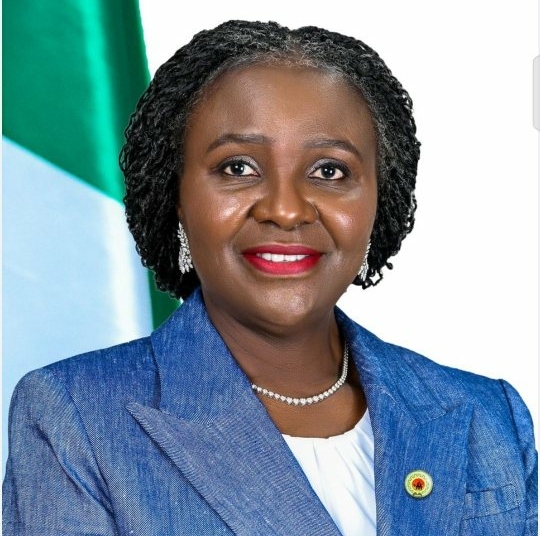
NUPRC Chief Executive, Oritsemeyiwa Eyesan,
Nigeria is emerging as Africa’s leading destination for upstream oil and gas capital, accounting for 38 per cent of all investment sanctioned on the continent in 2025, as projects worth $47.6 billion move through development following a renewed push to restore production and attract international investors.
The Nigerian Upstream Petroleum Regulatory Commission (NUPRC) said it had approved 120 oil and gas Field Development Plans (FDPs) involving about $47.6 billion in capital expenditure since 2024, with the projects expected to add 1.74 million barrels of oil and 13.9 billion standard cubic feet of gas per day to Nigeria’s production capacity when fully developed.
The scale of the investment pipeline marks a significant shift from the prolonged period of declining upstream investment, production disruptions and stalled projects that weakened Nigeria’s position in the global oil market.
NUPRC Chief Executive, Oritsemeyiwa Eyesan, disclosed the figures in Abuja during activities marking the fifth anniversary of the commission established under the Petroleum Industry Act (PIA) 2021.
She said Nigeria’s share of upstream investment sanctioned in Africa rose from an average of just four per cent between 2015 and 2023 to 38 per cent in 2025, making the country the continent’s leading upstream investment destination for the second consecutive year.
The investment momentum is already translating into higher production. Oil and condensate output increased from about 1.44 million barrels per day in 2022 to an average of 1.75 million barrels per day in the first seven months of 2026, with the latest production level reaching 1.82 million barrels per day.
Gas production also increased from 6.83 billion standard cubic feet per day in 2022 to about 7.97 billion standard cubic feet per day in the first seven months of 2026.
For Nigeria’s economy, the production increase carries major implications for foreign exchange earnings and government revenue. Higher crude output means more export volumes and potentially stronger dollar inflows, while increased gas production can support power generation, industrial activity and LNG exports.
Eyesan said the approved projects included the $10.3 billion Zabazaba-Etan development in OPL 245, which had remained stalled for more than two decades.
The commission has also reduced the time required to approve the reactivation of shut-in wells from two to six weeks to between two and four hours and approved 37 new crude evacuation routes to reduce production losses and improve the movement of crude from producing assets.
Nigeria is targeting three million barrels of oil and condensate production and 12 billion standard cubic feet of gas per day by 2030.
The renewed investment interest is extending beyond existing operators. Indonesia’s state-owned oil company, Pertamina, is considering producing assets and projects approaching Final Investment Decision in Nigeria and has expressed interest in the country’s upcoming 2026 licensing round.
The company is seeking overseas opportunities as domestic Indonesian production declines, with Nigeria now among the markets being considered for expansion.
Nigeria’s latest licensing exercise has also generated significant investor interest. Of 50 blocks offered in the 2025 licensing round, 37 attracted bids, with 143 companies submitting 200 bids. Thirty-one companies subsequently emerged as successful bidders for the 37 blocks.
The Federal Government has further introduced fiscal incentives aimed at attracting deep offshore investment, including a 2026 tax-remission order projected by NUPRC to unlock as much as $50 billion in investment and potentially support an additional one million barrels per day of production from deep offshore developments.
The investment surge, however, will only deliver its full economic value if approved projects move from paper to production, while regulatory certainty, security, crude evacuation infrastructure and cost competitiveness are sustained.
Nigeria’s challenge is therefore no longer simply attracting oil capital. It is converting the growing flow of investment into more barrels, more gas, stronger foreign exchange earnings, higher government revenue and a more competitive energy industry capable of supporting broader economic growth.
About The Author