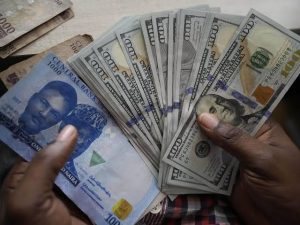
Nigeria’s 4.2% growth forecast outpaces global economy amid uneven expansion-IMF
International Monetary Fund (IMF) has projected Nigeria’s economy to grow by 4.2 per cent in 2026, outperforming the global growth forecast of 3.1 per cent and the 2.1 per cent average for advanced economies, as emerging markets continue to drive a larger share of world economic expansion.
The projection, published in the IMF‘s October 2026 World Economic Outlook and highlighted by data analytics firm StatiSense, placed Nigeria among the faster-growing major economies, although its forecast remains below India’s 7 per cent and China’s 4.5 per cent.
The IMF expects emerging markets and developing economies to grow by 3.7 per cent in 2026, reflecting their stronger aggregate expansion compared with advanced economies.
The figures underline the growing importance of developing economies to global output at a time when high energy prices, geopolitical tensions, rising public debt and uncertainty over the sustainability of investment in artificial intelligence continue to shape the global outlook.
For Nigeria, the projected expansion offers a measure of confidence in the economy’s growth trajectory, but the more consequential issue is whether that growth can translate into higher incomes, stronger production, increased employment and improved living standards.
Economic growth does not automatically mean that households are better off. Its impact depends on the sectors generating output, the number and quality of jobs created, the pace of price increases and how widely the benefits of economic activity are distributed.
Nigeria’s challenge is particularly pronounced because of the pressure on household purchasing power, high business operating costs and the need to expand productive investment beyond the oil sector.
The country’s growth prospects will depend partly on the performance of crude oil and gas, alongside agriculture, manufacturing, trade and services. Higher oil prices can support export earnings and government revenue, but they can also increase energy costs and put pressure on domestic businesses and consumers.
The global outlook also presents risks for Nigeria. The IMF has warned that a prolonged Middle East conflict, further energy supply disruptions and higher borrowing costs could weaken economic activity and intensify inflationary pressures.
While India remains the strongest performer among the major economies highlighted in the comparison, China is expected to maintain growth of 4.5 per cent, supported partly by technology-related exports and investment, although weak domestic demand continues to weigh on its outlook. The United States is projected to grow by 2.3 per cent, while Germany and the United Kingdom face more modest expansion.
Nigeria’s 4.2 per cent projection therefore compares favourably with several advanced economies, but it should not be interpreted as a ranking among the fastest-growing countries worldwide. Several smaller developing economies are projected to expand more rapidly.
The distinction matters because the size of an economy, its growth rate and the welfare of its citizens measure different things. A high growth rate can coexist with widespread poverty when gains in production do not generate sufficient jobs or when prices erode household incomes.
For Nigeria, the real test is whether projected growth can be supported by reliable electricity, improved transport infrastructure, affordable business financing, stronger local manufacturing and higher-value exports.
The IMF outlook places Nigeria on a stronger projected growth path than the global average. Turning that advantage into sustained improvements in productivity, employment and household welfare will determine whether the expansion delivers meaningful economic progress for Nigerians.
About The Author