BOI secures €60m to drive cocoa industrialisation
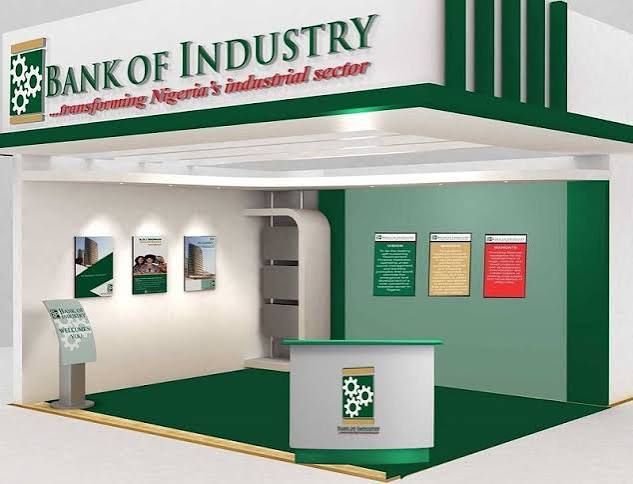
The Bank of Industry (BOI) has secured a €60 million credit facility from the European Investment Bank (EIB) to accelerate Nigeria’s cocoa industrialisation drive, with the lender committing about 70 per cent of an €85 million financing package to cocoa and dairy value chains as the country intensifies efforts to reduce raw commodity exports and expand local manufacturing.
Managing Director and Chief Executive Officer of BOI, Dr Olasupo Olusi, disclosed the development at the Africa Cocoa Summit in Abuja, saying the financing would support processors, cooperatives, manufacturers and small businesses involved in cocoa processing, ingredients production and chocolate manufacturing.
The summit, organised by the Federal Ministry of Industry, Trade and Investment under the theme “From Bean to Brand,” brought together government officials and industry leaders from Nigeria, Ghana, Côte d’Ivoire and Cameroon, who signed the Abuja Declaration establishing the Cocoa Value Addition Alliance (CVAA) to deepen regional processing and value addition.
Olusi said the €60 million facility forms part of the €85 million EIB-BOI financing package, backed by the European Union under its Global Gateway initiative, describing cocoa and dairy as sectors with enormous potential to create jobs, boost industrialisation and conserve foreign exchange.
According to him, BOI would prioritise financing for companies that process cocoa locally rather than firms exporting raw beans, stressing that Nigeria must end the practice of exporting primary commodities only to import finished products at significantly higher prices.
“The era of celebrating volumes of raw cocoa exports must end. Nigeria loses billions by exporting beans and importing finished chocolate. Our objective is to build factories around cocoa-producing communities so that value, employment, taxes and industrial growth remain within the country,” Olusi said.
He explained that the bank would complement the financing with technical assistance to help beneficiaries comply with international environmental and sustainability standards, including the European Union Deforestation Regulation, while improving access to European markets.
Olusi noted that BOI disbursed more than N164 billion to over 3,500 agro-processing and food manufacturing businesses in 2025, financing factories, processing plants, cold-chain infrastructure and packaging facilities that integrated nearly 48,000 smallholder farmers into formal industrial value chains.
He said the new intervention would extend across the entire cocoa ecosystem, covering nurseries, farmer cooperatives, processing plants, ingredient manufacturers, packaging companies and chocolate producers.
President Bola Tinubu, represented by the Minister of Agriculture and Food Security, Senator Abubakar Kyari, urged African cocoa-producing countries to move beyond exporting raw cocoa beans and instead capture a larger share of the estimated global chocolate industry’s value.
He noted that although Africa produces about 70 per cent of global cocoa, the continent retains only about six cents of every dollar generated across the global chocolate value chain.
Tinubu said Nigeria’s industrial policy under the Renewed Hope Agenda seeks to increase domestic processing, expand indigenous chocolate manufacturing and position Nigerian brands competitively in international markets.
He disclosed that investors are developing a 70,000-tonne cocoa processing plant in Shagamu, Ogun State, while Nigeria’s installed cocoa grinding capacity has exceeded 120,000 tonnes annually.
Minister of Industry, Trade and Investment, Dr. Jumoke Oduwole, said the summit aligns with the Federal Government’s ambition of building a $1 trillion economy by 2030, noting that Nigeria still earns only a fraction of the value generated across the global cocoa industry despite being one of the world’s leading producers.
She said the government is promoting manufacturing incentives, investment promotion and stronger institutional collaboration to encourage domestic processing while leveraging opportunities under the African Continental Free Trade Area (AfCFTA) to expand regional and international market access.
Minister of State for Industry, Senator John Owan Enoh, said the newly established Cocoa Value Addition Alliance would strengthen cooperation among Nigeria, Ghana, Côte d’Ivoire and Cameroon, countries that collectively account for about 75 per cent of global cocoa production.
According to him, the alliance is designed to promote local processing, deepen regional integration and enable producing countries to capture greater value from the global cocoa economy.
“We are not here to disrupt existing partnerships but to expand them,” Enoh said, urging African producers to develop globally competitive branded cocoa products rather than continue exporting raw beans.
Chief Executive of the Ghana Cocoa Board (COCOBOD), Dr. Ransford Abbey, also advocated stronger regional cooperation, saying Africa currently produces about 75 per cent of the world’s cocoa but earns less than 10 per cent of the global chocolate industry’s revenue.
“This system cannot continue. We must shift from exporting raw poverty to creating refined wealth on the African continent,” he said.
Also speaking, the Head of Cooperation of the European Union Delegation to Nigeria and ECOWAS, Mr. Massimo De Luca, reaffirmed the EU’s support for Africa’s cocoa industrialisation agenda and urged participating governments to establish the policy and regulatory frameworks necessary to attract investment and sustain value addition across the cocoa value chain.
About The Author