Food inflation limits CBN’s grip on prices, analysts warn
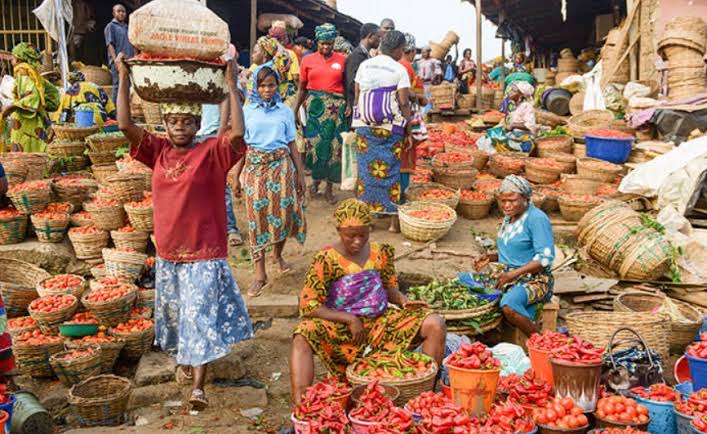
Rising food prices have emerged as the biggest threat to Nigeria’s inflation outlook, with analysts warning that the latest surge in farm produce prices is largely beyond the control of the Central Bank of Nigeria’s (CBN) monetary policy, raising fresh concerns over the sustainability of the country’s disinflation trend.
The warning followed the National Bureau of Statistics’ (NBS) report showing headline inflation eased marginally to 15.91 per cent in June from 15.93 per cent in May, while monthly inflation slowed to 1.66 per cent from 1.75 per cent. However, food inflation accelerated, with the monthly food inflation rate rising to 3.75 per cent from 2.98 per cent, signalling renewed pressure on household living costs.
In its review of the June Consumer Price Index (CPI), Zrosk Equity Research said the moderation in headline inflation concealed a sharp increase in farm produce prices, which surged 4.42 per cent month-on-month in June after easing to 0.86 per cent in May.
The research firm argued that the latest inflation pattern indicates that food supply disruptions, rather than excess demand, have become the dominant source of price pressures.
“June’s deceleration to 1.66 per cent month-on-month is not the disinflation signal it appears. Core cooling to 1.66 per cent is genuine, but farm produce at 4.42 per cent month-on-month opens an independent inflation channel that the CBN has no monetary tool to address. The risk has shifted from services to food,” the analysts stated.
According to the report, farm produce, which accounts for about 95 per cent of Nigeria’s food basket and 26.61 per cent of the overall CPI basket, contributed 1.18 percentage points, or about 71 per cent, of the country’s 1.66 per cent monthly headline inflation in June. This compares with just a 13 per cent contribution recorded in May.
The analysts described the latest increase as a domestic agricultural supply shock that conventional monetary tightening cannot effectively contain, noting that the inflationary pressure is now being driven more by food supply constraints than by energy prices or exchange rate movements.
They warned that should farm produce inflation remain elevated in July, headline inflation could stay above 1.5 per cent month-on-month regardless of improvements in foreign exchange stability or lower energy prices.
The report added that while higher interest rates may continue to restrain demand-driven inflation, reducing food inflation would require structural measures aimed at boosting agricultural production, improving food logistics, strengthening supply chains and expanding market distribution.
The latest assessment aligns with a more cautious monetary policy outlook by international financial institutions.
Standard Chartered Bank, in its latest economic outlook, projected that the CBN would reduce the Monetary Policy Rate (MPR) by only 150 basis points in 2026, ending the year at 25 per cent.
The bank also revised its average inflation forecast upward to 15.5 per cent for 2026 from an earlier projection of 12 per cent, citing persistent food price pressures that have narrowed the scope for aggressive monetary easing.
The outlook suggests that although Nigeria’s headline inflation has continued to moderate, food prices are likely to remain the principal risk to price stability and household purchasing power in the second half of the year.
About The Author