Lagos needs N6trn yearly to close 3.4m housing gap-GTI
Lagos needs about N6 trillion annually to bridge its housing financing gap, as the state’s housing deficit reached 3.4 million units in 2025, highlighting a widening mismatch between housing supply, household incomes and available long-term capital.
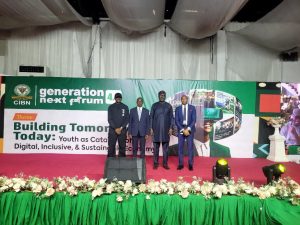
The figures were presented by Prof Timothy G. Nubi, Founding Director of the University of Lagos Centre for Housing and Sustainable Development, at the GTI Group’s Beyond Rent: A Lagos Housing and Capital Forum in Lagos.
Nubi said the housing deficit increased from 2.95 million units in 2016 to 3.4 million units in 2025, representing a 15 per cent increase in nine years.
He estimated that Lagos requires about 227,576 new housing units every year to keep pace with population growth and replace deteriorating housing stock.
“Lagos has become Africa’s economic capital, but its housing system has failed to convert economic growth into affordable living and wealth creation,” Nubi said.
The N6 trillion annual financing gap is roughly three times the Lagos State Government’s entire capital budget, according to GTI Capital research presented at the forum.
Head of Research at GTI Capital, Abiodun Ogunniyi, said the housing crisis was not simply a shortage of homes but also a problem of capital allocation, affordability and infrastructure costs.
His research showed that rents across Lagos increased by 80 to 120 per cent between 2024 and 2026, while wages grew by only 7 to 9 per cent.
The result has been a sharp deterioration in housing affordability, with some residents spending 60 to 70 per cent of their income on rent.
A two-bedroom apartment could consume about 29 per cent of the income of a worker earning N1 million monthly, 58 per cent for someone earning N500,000 and as much as 97 per cent for a worker earning N300,000.
For a low-income earner on N70,000 monthly, housing costs could consume between 36 and 119 per cent of income, even in less expensive areas such as Ikorodu.
The affordability crisis is also reflected in Lagos’ property price-to-income ratio of 19.2 times, far above the 5.0-times threshold regarded as severely unaffordable.
Ogunniyi said the mismatch between rents and incomes had transformed housing into a broader capital-market and financial-inclusion problem.
The research also examined the capacity of households to purchase homes using a 9.75 per cent mortgage rate, 20-year tenor and 10 per cent equity contribution under the Mortgage Refinance and Real Estate Investment Fund (MREIF) framework.
It estimated that low-income earners could afford properties below N3.51 million, while lower-middle-income earners could afford homes between N3.51 million and N8.79 million.
Middle-income earners could afford properties between N8.79 million and N29.87 million, while upper-middle-income earners could afford between N29.87 million and N105.42 million.
The figures indicate that even subsidised mortgage financing remains largely inaccessible to many lower-income households.
GTI therefore called for greater use of capital-market instruments, including Real Estate Investment Trusts, bonds, asset-backed securities, crowdfunding and mortgage innovations, to mobilise long-term capital for housing.
Nubi said Nigeria’s pension funds, with about N30 trillion in assets, could play a much bigger role. Although pension funds are permitted to allocate up to 30 per cent to REITs, mortgages and asset-backed securities, actual allocation to housing-related instruments remains around 5 per cent.
He said government alone could not build enough homes to solve Lagos’ housing crisis and called for greater participation by private developers, institutional investors and mortgage-finance institutions.
Representing the Lagos State Government, Permanent Secretary of the Ministry of Housing, Abdulhafis Gbolahan Toriola, said the state was working to create an enabling environment for housing development.
He highlighted the role of the Lagos State Real Estate Regulatory Authority in registering developers and resolving disputes, while urging prospective property buyers to conduct proper searches and complete the required documentation before purchasing land.
He also acknowledged the need to review aspects of the Land Use Act of 1978 and noted that construction delays could significantly increase project costs because building-material prices remain volatile.
For Lagos, the housing challenge is therefore increasingly a financing problem as much as a supply problem. Closing the N6 trillion annual gap will require mobilising institutional and private capital at a scale far beyond conventional government housing programmes, while bringing rents and home prices closer to the incomes of ordinary residents.
About The Author