CBN raises bar for banks as N4.65trn recapitalisation must drive growth

The Central Bank of Nigeria (CBN) has challenged banks to turn the N4.65 trillion raised through the sector’s recapitalisation exercise into productive lending, investment and broader economic growth, warning that stronger balance sheets must ultimately deliver greater financing to businesses and households.
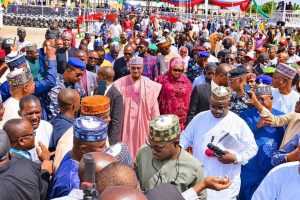
Deputy Governor, Corporate Services, Dr Muhammad Sani Abdullahi, issued the challenge on Tuesday at the 38th Seminar for Finance Correspondents and Business Editors in Lagos, themed “Towards a Robust and Resilient Financial System in the Post-Banking Sector Recapitalisation Era”.
Abdullahi said 33 banks successfully met the revised capital requirements introduced by the CBN and raised a combined N4.65 trillion by the end of the two-year recapitalisation programme. He said the stronger capital base should enable lenders to finance long-term infrastructure, industrial expansion and international trade while giving them greater capacity to absorb future shocks.
But the CBN said the amount of capital raised should not be the sole measure of the exercise.
“Capital, however, is a starting point,” Abdullahi said, stressing that banks must maintain sound controls, recognise risks early and lend on the strength of viable projects.
The emphasis places the banking industry at a critical point in Nigeria’s economic recovery. Manufacturers, agriculture, services and infrastructure companies require financing that matches their investment horizons, while smaller businesses and households need dependable financial services and access to appropriate credit.
Abdullahi said the CBN would assess the success of recapitalisation partly by the quality of banking services and productive lending it supports, rather than simply by the volume of fresh capital mobilised.
He said stronger banks should extend financing to rural communities, women and young entrepreneurs while improving financial inclusion and consumer protection.
The CBN’s call comes against evidence of a broader improvement in Nigeria’s financial and external position since the reform programme began.
Abdullahi said the gap between official and parallel foreign exchange rates had fallen from an average of 68.2 per cent between January and May 2023 to less than 2 per cent, giving businesses a more reliable basis for pricing and investment decisions.
Gross foreign exchange reserves stood at $55.60 billion on September 11, providing 11.3 months of import cover by the end of August. Headline inflation, which reached 34.8 per cent in December 2024, had moderated to 15.43 per cent in July 2026, while real GDP expanded by 4.43 per cent in the second quarter, driven largely by non-oil activity.
The deputy governor said the sources of foreign exchange had also improved. Autonomous inflows accounted for nearly 68 per cent of the $10.82 billion recorded in July, while remittances through International Money Transfer Operators reached $950 million. Net foreign portfolio inflows stood at $6.31 billion between January and August.
For banks, however, the post-recapitalisation environment brings higher expectations around governance, asset quality, liquidity, cybersecurity and risk management.
For the wider economy, the CBN’s message is clear: the N4.65 trillion recapitalisation must now move beyond stronger bank balance sheets into more finance for production, infrastructure, technology, agriculture and small businesses.
The next test of the banking reforms will therefore be measured not simply in capital adequacy, but in how effectively Nigerian banks convert their stronger balance sheets into investment, jobs and sustainable economic growth.
About The Author