Court injunction threatens $500m World Bank power loan, delays 1.55m smart meters
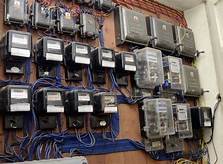
A legal battle initiated by local electricity meter manufacturers has emerged as a major threat to Nigeria’s electricity sector reform programme, putting at risk the procurement of 1.55 million smart meters under the $500 million World Bank-backed Distribution Sector Recovery Programme (DISREP).
The latest Implementation Status and Results Report by the World Bank warned that a court injunction secured by the Association of Meter Manufacturers of Nigeria (AMMON) has stalled the international procurement process and could ultimately force the cancellation of the exercise, potentially delaying efforts to reduce the country’s huge metering gap.
The report noted that the injunction, obtained on April 30, 2026, halted the opening of bids for the International Competitive Bidding (ICB2) programme designed to procure 1.55 million smart meters.
According to the World Bank, the litigation has become the single biggest implementation risk confronting the $500 million power sector recovery programme, despite improvements recorded across the electricity distribution industry.
The lender stated that the programme’s implementation rating had improved from “Moderately Unsatisfactory” to “Moderately Satisfactory” over the past six months due to steady progress, but cautioned that the metering dispute could reverse those gains.
AMMON, which represents local meter manufacturers and assemblers, argues that the procurement arrangement favours foreign suppliers and undermines domestic manufacturing capacity.
“The most significant implementation risk at present is the court injunction obtained by the Association of Meter Manufacturers of Nigeria (AMMON) on April 30, 2026, which has halted the opening of bids for the procurement of 1.55 million additional smart meters,” the World Bank stated.
The Transmission Company of Nigeria’s Project Management Unit has extended the bid submission deadline three times, with the latest deadline fixed for June 25, 2026, while discussions continue among relevant government agencies aimed at resolving the dispute.
However, the World Bank warned that prolonged litigation could compel authorities to abandon the procurement process to avoid additional delays and rising costs.
“If the matter cannot be resolved in the near term, cancellation of the ICB2 procurement may need to be considered to avoid market uncertainty, cost escalation, and further programmatic delay,” the report said.
The development represents another challenge for Nigeria’s electricity reform efforts, particularly after the country recently cancelled $717.7 million in undisbursed World Bank funding under the Power Sector Recovery Performance-Based Operation.
The report indicated that contracts for 217,000 meters to be procured locally through National Competitive Bidding have reached an advanced stage after receiving comments from the Attorney General of the Federation. However, the Bureau of Public Enterprises has linked the execution of those contracts to the resolution of the ongoing court case.
Despite the legal setback, the World Bank said progress under the first phase of international procurement has continued.
As of June 15, 2026, approximately 1.23 million smart meters had been manufactured, while 1.03 million had already been shipped to Nigeria. Of that number, 482,000 meters had been installed, compared with 365,000 recorded during the programme’s mid-term review in April.
The lender also noted that recent directives issued by the Nigerian Electricity Regulatory Commission are expected to accelerate meter deployment across electricity distribution companies.
The programme has so far provided electricity access to about 530,000 people under the Mission 300 initiative, with further gains expected as installations continue.
Operational indicators also showed modest improvements in the sector. Nigeria’s metering gap narrowed to 57.27 per cent, while billing efficiency improved to 82.02 per cent.
Customer meter installations rose to 379,380 from 265,000 earlier in the year, while direct electricity connections increased to 418,033 people. More than three million customers have also been mapped under the Geographic Information System programme against a long-term target of nearly 13 million.
Financial data contained in the report showed that only $87.34 million, representing about 17.5 per cent of the $500 million facility, had been disbursed as of June 2026.
The Bureau of Public Enterprises has also commenced the phased transfer of a $37.5 million advance released by the World Bank in December 2025 to electricity distribution companies, subject to the execution of revised performance improvement plans.
Meanwhile, the World Bank disclosed that preparation for an additional $308 million financing package is progressing, with the concept note completed and awaiting approval to move to the next stage.
With the World Bank warning that the procurement exercise could be cancelled if the legal dispute persists, industry stakeholders fear that another delay in the metering programme could undermine efforts to improve revenue collection, reduce estimated billing and strengthen the financial viability of Nigeria’s electricity distribution companies
About The Author