Nigeria’s crude oil production hits 1.56mbpd in June, highest since April 2020
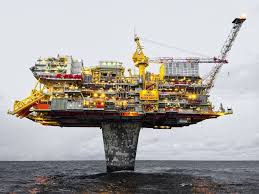
Nigeria’s crude oil production climbed to an average of 1.56 million barrels per day (mbpd) in June 2026, marking the country’s strongest monthly output in more than six years and the highest since April 2020.
The Nigerian Upstream Petroleum Regulatory Commission (NUPRC) confirmed the figures, noting that Nigeria exceeded its OPEC quota of 1.5mbpd by 104 per cent, while combined crude oil and condensate production reached 1.735mbpd.
The June performance represents the fourth consecutive month of growth, with output rising from 1.483mbpd in February to 1.546mbpd in March, 1.663mbpd in April, 1.700mbpd in May, and now 1.735mbpd in June. This steady trajectory underscores improved operational stability, enhanced crude evacuation efficiency, and the absence of major pipeline outages.
NUPRC highlighted that crude oil output alone hit a 74-month high, while combined production peaked at 1.89mbpd during the month. The lowest daily production was 1.57mbpd, showing that output consistently hovered near the 2mbpd mark. For investors and policymakers, this signals a significant recovery in Nigeria’s upstream sector after years of underperformance.
The achievement is particularly notable given Nigeria’s recent struggles with crude theft, pipeline vandalism, and underinvestment. June marked the second consecutive month Nigeria exceeded its OPEC quota, after producing 1.530mbpd in May 2026. Before then, the last time the country surpassed its quota was in July 2025, when production averaged 1.505mbpd.
Industry stakeholders see the rebound as a turning point. Austin Avuru, co-founder of Platform Petroleum and Seplat Energy, projected earlier this year that Nigeria’s crude oil production could rise to 2.3mbpd by 2030 if investment continues to return. ExxonMobil and partners have already committed US$1 billion to the Usan Infill Project, expected to add 40,000 barrels per day.
The Federal Government has set a long-term production benchmark of 2.6mbpd, though it retained a more conservative 1.8mbpd for budget implementation in 2026. The gap reflects the challenge of balancing ambition with operational realities.
For Nigeria, higher crude oil output directly strengthens fiscal revenues and foreign exchange earnings, given the economy’s dependence on oil. Sustaining this momentum will require continued investment, improved infrastructure, and stronger security around pipelines. But June’s figures show that Africa’s largest oil producer is regaining ground, outperforming regional rivals such as Libya, Algeria, Congo, and Gabon.
About The Author