Oil prices tumble as US-Iran truce eases supply fears, China halves imports
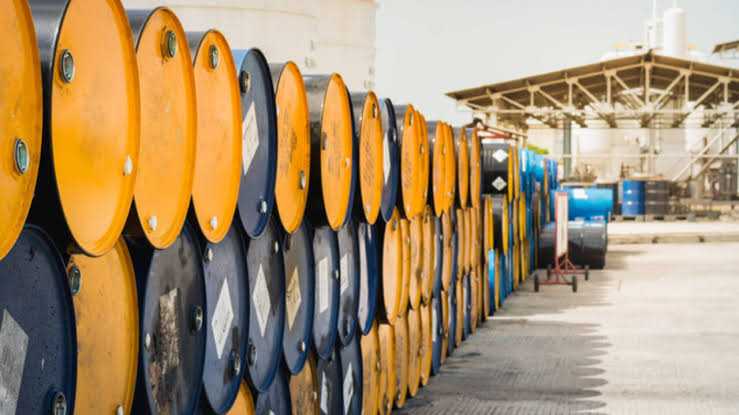
Global oil prices fell sharply on Monday after the United States and Iran paused hostilities, easing fears of a prolonged disruption to Middle East crude supplies, while the International Energy Agency (IEA) said China had cut crude oil imports by nearly 50 per cent during the conflict, helping cushion pressure on global energy markets.
Brent crude futures fell by between 5 and 6 per cent during trading, retreating from last week’s peak of almost $100 per barrel. Brent was trading at between $86.38 and $91.89 per barrel during the session, while U.S. West Texas Intermediate (WTI) crude declined to between $83.69 and $84.64 per barrel.
The decline followed US President Donald Trump’s decision to suspend military strikes against Iran after nearly two weeks of hostilities, signalling a preference for diplomacy over further military escalation.
The conflict had pushed Brent crude briefly above $100 per barrel amid concerns that attacks around the Strait of Hormuz and the Bab el-Mandeb Strait could significantly disrupt global oil supplies.
However, markets reacted positively after Washington and Tehran paused hostilities, raising hopes that diplomatic negotiations could restore shipping through one of the world’s most strategically important energy corridors.
According to reports by Axios, Trump directed the US military not to launch additional strikes against Iran, believing that current military operations had achieved their immediate objectives without requiring a broader conflict.
CNN also reported that Vice President JD Vance and senior military officials had advised the President against expanding the conflict during high-level security consultations.
Despite the diplomatic pause, Iran maintained a cautious position.
Iranian Foreign Ministry spokesman Esmaeil Baqaei said conditions were not yet suitable for formal negotiations, accusing Washington of undermining diplomacy through its military operations.
Similarly, Foreign Ministry spokesman Mohammad Akraminia warned that any renewed American attacks could significantly widen the conflict.
“The US may have devised other scenarios for the coming days, but the current situation is not what they desire,” he said.
“If the Americans insist on continuing the war and airstrikes, the geography of the war will expand.”
Although the military pause has improved market sentiment, shipping activity through the Strait of Hormuz remains well below normal.
Shipping intelligence firm Kpler reported that fewer than 10 commodity vessels transited the waterway daily over the weekend, while traffic through the Bab el-Mandeb Strait also remained subdued following attacks linked to Yemen’s Houthi rebels on Saudi oil infrastructure along the Red Sea.
Analysts said shipping companies remain cautious despite the temporary easing of tensions, with overall vessel movements still significantly below normal levels.
The International Energy Agency said global oil markets have been supported by several stabilising factors despite the conflict.
According to IEA Executive Director Fatih Birol, increased crude exports from Saudi Arabia, the United Arab Emirates, the United States, Brazil, Venezuela and Kazakhstan have helped offset disruptions from the Middle East.
On the demand side, Birol said China has played a significant stabilising role by reducing its crude oil imports by almost 50 per cent compared with pre-conflict levels, easing pressure on global energy demand during the crisis.
The combination of higher production outside the conflict zone and weaker Chinese demand has limited the upward pressure on crude prices despite continued geopolitical uncertainty.
The renewed conflict has nevertheless influenced monetary policy across several economies, with central banks becoming increasingly cautious over the inflationary impact of higher energy prices.
In Nigeria, the Central Bank of Nigeria (CBN) recently retained the Monetary Policy Rate (MPR) at 26.5 per cent after the Monetary Policy Committee reviewed both domestic and global economic developments.
CBN Governor Olayemi Cardoso said global uncertainties had intensified mainly because of the renewed hostilities in the Middle East, adding that maintaining a cautious monetary policy stance remained necessary to preserve recent gains in inflation moderation, stabilise the foreign exchange market and safeguard macroeconomic stability.
The latest retreat in oil prices has also renewed expectations that domestic petrol prices could moderate if international crude prices continue to decline.
Before the geopolitical crisis intensified, petrol sold between N800 and N900 per litre across Nigeria, with marketers expressing optimism that pump prices could gradually return towards those levels if geopolitical tensions continue to ease and normal crude shipments resume.
About The Author