FG rules out tariff hike, targets stronger grid, 7m meters
The Federal Government has ruled out any immediate increase in electricity tariffs, shifting its focus instead to expanding power supply, deploying seven million electricity meters and strengthening the national grid as part of a broad reform agenda aimed at delivering reliable electricity and driving economic growth.
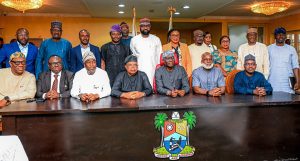
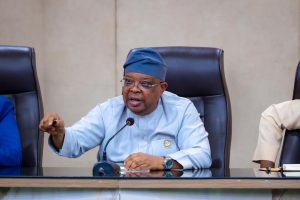
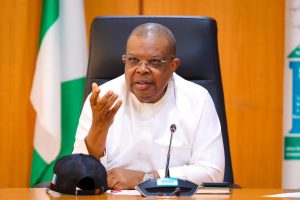
Minister of Power, Joseph Tegbe, disclosed this on Friday during a media stakeholders’ engagement in Lagos, where he outlined the administration’s roadmap for resetting Nigeria’s electricity sector through improved generation, transmission, distribution, metering and financial sustainability.
He dismissed reports suggesting that the government was planning another tariff increase, insisting that the administration’s priority remains improving service delivery and ensuring Nigerians pay only for the electricity they consume.
“There is no policy by this administration to increase electricity tariffs beyond the current level. Our priority is service improvement, universal metering and ensuring Nigerians pay only for the services they receive,” Tegbe said.
The minister revealed that the Federal Government plans to deploy seven million electricity meters over the next three years to eliminate estimated billing, which he described as one of the biggest sources of distrust between electricity distribution companies and consumers.
He said 5,000 young Nigerians had already been recruited and trained under the government’s Power Force Initiative to support nationwide meter installation, with plans to expand the programme to 500,000 youths, creating jobs while closing the country’s metering gap.
According to him, an additional 1.56 million meters will be deployed before the end of the year following the resolution of procurement disputes that had delayed implementation.
Tegbe said recent stakeholder engagements had resolved outstanding issues surrounding meter procurement and lifted legal impediments that stalled deployment over the past several months.
He also announced that electricity generation had consistently exceeded 5,000 megawatts over the past two weeks, describing the development as evidence of improving coordination across the electricity value chain.
While welcoming the progress, the minister stressed that higher generation alone would not solve Nigeria’s electricity challenges.
“Electricity must be generated, transmitted, distributed and, importantly, paid for. All these components must function simultaneously,” he said.
Tegbe identified liquidity constraints, commercial inefficiencies and governance challenges as the major obstacles confronting the sector, noting that technical issues represented only part of the industry’s problems.
To restore financial stability, he said the government was advancing the Power Sector Bond Initiative to clear accumulated legacy debts owed to electricity generation companies, gas suppliers and other market participants.
He recalled that President Bola Tinubu had approved a N3.3 trillion payment plan under the Presidential Power Sector Financial Reforms Programme to settle longstanding obligations, while the government had earlier concluded frameworks for a N4 trillion government-backed bond and already issued an inaugural N501 billion bond under the Presidential Power Sector Debt Reduction Programme.
The government also recently approved a second tranche of about N729 billion to settle verified legacy debts owed to generating companies.
According to the minister, restoring liquidity is essential to rebuilding investor confidence and ensuring operators can recover legitimate revenues needed to sustain investments.
He disclosed that the ministry would commence a comprehensive technical audit of the national transmission network to identify ageing infrastructure, overloaded substations, weak transmission corridors and other bottlenecks that have constrained electricity evacuation.
The audit, he said, would guide investment decisions and ensure public resources are channelled towards projects with the highest economic impact.
Tegbe said the government had also begun implementing strategic grid interventions across the Lagos, Enugu-Port Harcourt and Abuja-Kaduna-Kano corridors while advancing a Super Grid Programme designed to strengthen transmission capacity, improve redundancy and support significantly higher electricity volumes.
He added that under-utilised transmission assets would be linked to industrial clusters and manufacturing hubs to maximise existing infrastructure and stimulate economic activity.
On regulatory reforms, Tegbe said the Ministry of Power was working closely with the Nigerian Electricity Regulatory Commission and newly established state electricity regulatory agencies to harmonise responsibilities under the Electricity Act 2023 and provide greater regulatory certainty for investors.
The minister said the administration was equally promoting renewable energy, targeting a 40 per cent contribution from solar power to Nigeria’s energy mix by 2060.
According to him, solar mini-grids are already being deployed across universities and teaching hospitals, with several projects expected to be commissioned in the coming weeks.
Tegbe further disclosed that the government intends to phase out the current electricity subsidy regime by next year while ensuring improved service delivery for consumers.
He acknowledged that the sector still faces significant challenges but expressed confidence that Nigerians would begin to see noticeable improvements in electricity supply within the next few months, with a stronger and more reliable national grid expected over the next two to three years.
He stressed that the success of the ongoing reforms would ultimately be measured by their impact on households, businesses and industries rather than electricity generation figures alone.
“The objective is to build a power sector capable of supporting national productivity, attracting investment and driving industrial growth,” the minister said.
About The Author