Nigeria’s exports to China jump 80% to $2.3bn, trade deficit persists
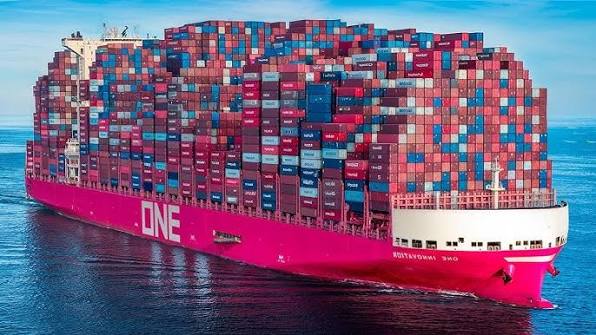
Nigeria’s exports to China jumped 80 per cent to $2.3 billion in the first half of 2026, following the implementation of China’s expanded zero-tariff policy for African countries, but the surge has yet to reverse Nigeria’s heavy trade deficit with its largest trading partner.
Chinese Ambassador to Nigeria, Yu Dunhai, disclosed this at an international seminar on China’s zero-tariff measures and Africa’s economic structural transformation in Abuja, saying bilateral trade rose 35 per cent year-on-year to $18 billion in the first half of 2026.
He said Nigerian exports recorded their strongest growth after China’s zero-tariff policy took effect on May 1, with monthly export growth exceeding 40 per cent in both May and June.
“Chinese imports from Nigeria surged 80 per cent to $2.3 billion, with monthly growth exceeding 40 per cent in both May and June,” Yu said.
The increase provides one of the clearest early signs of the potential benefit to Nigerian exporters from China’s decision to eliminate tariffs on 100 per cent of tariff lines for the 53 African countries with which it maintains diplomatic relations.
The policy, announced by Chinese President Xi Jinping in June 2025, expanded an earlier preferential arrangement for least-developed African countries and formally took effect on May 1, 2026.
For Nigeria, the immediate opportunity is to use the tariff advantage to increase shipments of agricultural commodities, minerals, energy products and other goods while moving towards greater local processing and value addition.
Yu said China and Nigeria were also expanding cooperation in trade facilitation, investment protection, local processing and industrial development, while encouraging Nigerian businesses to improve their capacity to meet Chinese market standards.
Despite the 80 per cent export increase, however, the trade relationship remains heavily tilted towards China.
Nigeria’s imports from China continued to substantially exceed its exports, resulting in a large trade deficit.
In the first quarter of 2026, bilateral trade stood at N5.68 trillion, with imports from China accounting for N5.10 trillion and Nigerian exports standing at N582.20 billion. The resulting trade deficit was N4.51 trillion.
The latest export surge therefore represents progress in narrowing the imbalance but not yet a fundamental change in the structure of bilateral trade.
Nigeria’s trade with China was worth N22.57 trillion in 2025, with China accounting for about 15 per cent of Nigeria’s total trade. Nigerian exports were valued at N2.78 trillion, compared with N19.79 trillion of imports, producing a N17.01 trillion trade deficit for the year.
The composition of the trade relationship also highlights the underlying challenge.
Nigeria’s imports from China are dominated by manufactured and industrial products, including tractors, telecommunications equipment, motorcycles, solar panels, PVC products and agricultural machinery.
By contrast, Nigerian exports remain concentrated largely in primary commodities, including sesame seeds, tin ores, natural rubber, goat leather, malt and other mineral products.
The zero-tariff policy could therefore have a larger economic impact if Nigeria uses improved market access to increase processing within the country before export.
That would allow Nigerian businesses to capture more value from commodities, expand production, create jobs and generate higher foreign exchange earnings rather than simply increasing the volume of raw-material exports.
The Chinese ambassador said the tariff changes had already reduced export costs for Nigerian producers of products including sesame, cattle bone granules and liquefied propane, making them more competitive in the Chinese market.
He said the policy had contributed to an estimated 6 per cent increase in overall African exports to China, while China-Africa trade reached a record $207 billion in the first half of 2026.
For Nigeria, the challenge is now to convert market access into a sustained export expansion.
This will require greater production capacity, reliable power and logistics, stronger quality-control systems, efficient ports and cold-chain infrastructure, access to trade finance and compliance with Chinese health, safety and technical standards.
The government will also need to encourage investments in processing industries capable of supplying higher-value products to China.
The latest figures nevertheless indicate that Chinese tariff liberalisation is beginning to alter the economics of Nigerian exports to the market.
A sustained increase in exports would strengthen Nigeria’s foreign exchange supply at a time when the country is seeking to diversify dollar earnings beyond crude oil and broaden its non-oil export base.
It could also reduce the persistent trade imbalance if Nigerian firms are able to move beyond commodity exports and become more competitive suppliers of processed agricultural, industrial and energy products.
The opportunity is substantial, but the numbers also show the scale of the challenge.
Nigeria exported only about 13 per cent of the $18 billion in bilateral trade recorded in the first half of 2026, based on the ambassador’s figures, underscoring how far the country still has to go to rebalance trade with China.
The current export surge is therefore an important opening, but not yet a transformation.
The economic test for Nigeria will be whether the new zero-tariff access can be converted into sustained export growth, domestic production and value addition capable of narrowing the trade deficit and increasing the amount of foreign exchange retained by the Nigerian economy.
About The Author