FG probes N120bn power loss as 100MW vanishes on Ikorodu–Mobile corridor
The Federal Government has launched a high-level investigation into up to 100MW of unaccounted electricity and an estimated N120 billion in annual losses along the 132kV Ikorodu–Sagamu industrial corridor, as it moves to tighten control over energy theft, metering and revenue leakages in one of Nigeria’s major industrial clusters.
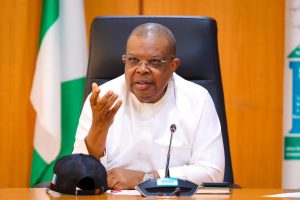
Minister of Power, Joseph Tegbe, announced the intervention during a stakeholder meeting with industrial electricity users and operators across the power value chain, following growing discrepancies between electricity supplied to the corridor and energy accounted for by market participants.
The Ikorodu–Sagamu corridor hosts some of Nigeria’s largest industrial electricity consumers, making the scale of the alleged losses significant for both manufacturing output and the financial sustainability of the power market.
Technology-based monitoring systems deployed by the Nigerian Independent System Operator (NISO) since 2024 have provided greater visibility into electricity flows and exposed anomalies in consumption and loading patterns along the corridor.
By 2026, the discrepancies had become increasingly difficult to reconcile, with losses reportedly reaching as high as 100MW and translating into an estimated N120 billion revenue loss within one year.
Tegbe assured industrial operators that the Federal Government remained committed to providing the reliable electricity required to sustain production, investment and economic activity.
He, however, warned that improved electricity supply must be matched by accurate metering, responsible consumption and payment for energy actually consumed.
“We must know where the power is going and what is compromising it,” the minister said, directing stakeholders to establish the facts through a transparent, scientific and fair investigation.
He warned that the government would take firm action against meter tampering, deliberate interference with energy measurement, manipulation of electricity data and other forms of energy theft capable of depriving the market of legitimate revenue.
“Every consumer must be responsible for their actions and consumption,” Tegbe said.
The investigation is expected to identify the source of the discrepancies, determine the extent of commercial and technical losses and establish whether deliberate energy theft or metering manipulation is responsible for part of the gap.
The minister said the intervention formed part of broader efforts to strengthen financial discipline and accountability across Nigeria’s electricity value chain while creating a stable operating environment for productive industries.
He urged industrial consumers, distribution companies, transmission and system operators and other stakeholders to cooperate fully with the technical investigations.
The meeting brought together the Managing Director and Executive Directors of NISO, representatives of the Transmission Company of Nigeria, the Managing Directors of Ikeja Electric and Ibadan Electricity Distribution Company, and representatives of industrial firms operating along the corridor.
The Federal Government’s intervention comes as manufacturers continue to identify electricity costs and reliability as major determinants of competitiveness.
For industries, eliminating losses and improving the accuracy of energy accounting could reduce distortions in electricity billing while improving confidence in supply arrangements.
For the electricity market, recovering even part of the estimated N120 billion annual leakage could provide additional liquidity to support generation, transmission and distribution investment.
The investigation therefore carries significance well beyond the Ikorodu–Sagamu corridor. If the government succeeds in closing the alleged 100MW gap, it could demonstrate that better metering, digital monitoring and stronger enforcement can recover substantial value from Nigeria’s electricity system without relying solely on new generation capacity.
The immediate task is to establish where the missing 100MW is going, who is responsible and how quickly the N120 billion leakage can be stopped.
About The Author