Babalakin, LAAC demand balance between aviation revenue and industry growth

Chairman of Bi-Courtney Aviation Services Limited, Dr Wale Babalakin (SAN), and aviation correspondents have urged the Federal Government to balance revenue generation with the need to keep Nigeria’s aviation industry competitive, warning that excessive fiscal and regulatory burdens could undermine the investment required to expand the sector.
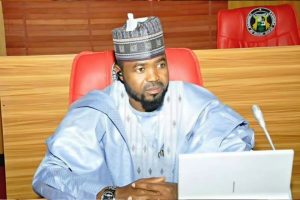
Babalakin made the call at the 30th League of Airport and Aviation Correspondents (LAAC) Annual Conference in Lagos, where he was represented by the company’s Chief Operating Officer, Remi Jibodu.
He said government revenue collection and aviation industry growth should be treated as complementary objectives rather than competing interests, arguing that a larger and more commercially viable aviation sector would ultimately provide a stronger and more sustainable revenue base for the government.
According to him, Nigeria’s sizeable aviation market could only be fully exploited through an investment environment capable of attracting and retaining private capital for infrastructure development.
He stressed that practical experience should inform the economic models adopted for aviation infrastructure, particularly where projects require substantial long-term investment.
Babalakin also called for stronger government-private sector collaboration and more effective concession arrangements, saying concessions should deliver benefits to all parties rather than simply transfer responsibility for infrastructure.
“The broader lesson is that a concession must go beyond the transfer of responsibility. It should create a sustainable economic model that delivers value to government through revenue and infrastructure, to the investor through commercial viability, and to the travelling public through improved service, safety, efficiency and convenience,” he said.
He said government revenue and industry growth should not be viewed as opposing objectives because a thriving aviation industry would create more opportunities for sustainable public revenue.
Babalakin added that airports had evolved beyond being simply points of departure and arrival, with opportunities in cargo, retail, hospitality, parking, advertising and property, among other commercial activities.
He said policy consistency and trust were essential to attracting long-term investors, stressing that businesses needed confidence that the rules governing their investments would remain predictable.
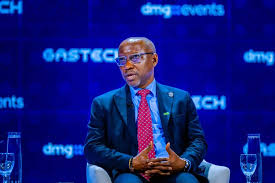
Chairman of LAAC, Idris Sulaiman, similarly called for deeper consultation between the Federal Government and aviation stakeholders before major fiscal and regulatory decisions are introduced.
Sulaiman said consultation should extend beyond informing operators about policies that had already been approved to ensuring that industry concerns were considered during the policy development process.
He said the issue was particularly important amid ongoing discussions around the five per cent Ticket Sales Charge (TSC), Cargo Sales Charge (CSC) and other revenue-related measures affecting aviation.
While acknowledging the government’s legitimate need to generate revenue and aviation agencies’ requirement for sustainable funding, Sulaiman said policymakers must determine the level of charges the industry could reasonably absorb without undermining expansion.
“The challenge before us is not whether government should generate revenue from aviation. The more important question is: How much revenue can the sector reasonably bear without undermining its capacity to grow?” he said.
He also demanded greater transparency in the utilisation of revenues generated from aviation, urging stakeholders to examine how funds are deployed towards regulation, safety, security, infrastructure and the modernisation of air navigation systems.
Sulaiman commended the Nigerian Civil Aviation Authority, Federal Airports Authority of Nigeria and Nigerian Airspace Management Agency for efforts to improve regulation, airport infrastructure, passenger experience and airspace safety.
He also acknowledged the efforts of President Bola Tinubu and Minister of Aviation and Aerospace Development, Festus Keyamo, in repositioning the sector, but said significant work remained to make Nigeria’s aviation industry more competitive and sustainable.
The LAAC chairman further challenged aviation journalists to scrutinise government policy and industry performance rather than merely reproduce official statements.
“We must and will report the industry fairly. Where the government gets it right, we will say so. Where operators demonstrate resilience and innovation, we will highlight it. But where policies threaten the sustainability of the industry, we will also raise the alarm,” he said.
About The Author