Africa must build, finance, own its future, leaders say

African leaders and business figures have challenged the continent’s young generation to move beyond dependence and take greater control of Africa’s economic future by building industries, financing productive ventures and owning the institutions and assets that shape its global influence.
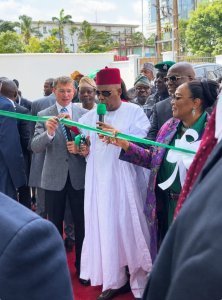
They made the call at the closing of the 2026 Aliko Dangote Foundation Africa Diaspora Leadership Programme Young Global Leaders Convening in Lagos, where participants from Africa and the diaspora were urged to turn ambition into enterprises and institutions capable of competing globally.
Deputy Secretary General of the United Nations, Amina Mohammed; former President and Chairman of the Board of Directors of Afreximbank, Prof Benedict Oramah; Minister of Finance and Coordinating Minister of the Economy, Taiwo Oyedele; Minister of Art, Culture, Tourism and the Creative Economy, Hannatu Musawa; and Chief Executive Officer of the Rwanda Development Board, Jean Guy Afrika, were among those who addressed the gathering.
The four-day learning journey, organised around the theme, “Building Africa at Scale”, exposed the Young Global Leaders to Nigeria’s industrial, financial, technological and creative sectors, with the Dangote Petroleum Refinery serving as one of the major examples of large-scale African enterprise.
Mohammed said Africa’s struggle for greater global influence was ultimately a contest over power, institutions and the ability to determine who controls the continent’s story.
She said Africans must move beyond seeking representation at global decision-making tables and begin building the capacity to influence and shape decisions.
“We can no longer be the people that are profited from. You have to own what it is that is your power,” Mohammed said.
Recalling discussions with young Africans about representation at the United Nations, she said the emerging generation was no longer satisfied with simply having “a seat at the table”.
“What we really want is the pen,” she quoted them as saying, explaining that the pen represented the power to write Africa’s own narrative.
Mohammed noted that African countries collectively constituted the largest regional grouping in the United Nations and wielded significant political and economic influence, but often approached international affairs as recipients rather than power brokers.
She urged African governments to strengthen institutions, improve strategic coordination and recognise the collective weight of the continent in global affairs.
Mohammed also identified artificial intelligence as an emerging area of global power, warning that Africa could not afford to remain on the margins of technological development.
Addressing the Young Global Leaders directly, she said they must be prepared to challenge established systems and pursue ideas capable of producing real change.
“Don’t follow the status quo,” she said. “Have the courage of your conviction and just bloody well do it.”
Oramah said one of the most important contributions of the Dangote Petroleum Refinery was not only its industrial output but the psychological effect of demonstrating that Africans could conceive, finance and execute complex projects at global scale.
“The greatest thing that the Dangote Refinery has done and will do for us is our ability to take back our minds,” he said.
He also called for greater control of African financial resources, urging commercial banks across the continent to embrace what he described as “developmental commercial banking” by supporting long-term productive investment.
Oyedele said governments must create an environment where more entrepreneurs could build businesses on the scale demonstrated by Dangote.
Describing Dangote as “a fighter”, the minister said his interaction with the industrialist had given him a different perspective on the persistence required to execute major investments in Nigeria.
“Until I got close to him, I saw that he was stressed more than the rest of us. But he would never give up,” Oyedele said.
“What if we create the right conditions so that he will be less stressed, so that other people will be encouraged to do the same thing?”
Oyedele said the government’s primary responsibility was to establish policies and regulations that would allow private capital to drive innovation, create jobs and provide viable infrastructure.
“The job of the government is to create the right policy environment so that the private sector can drive innovation, can create jobs and provide viable infrastructure,” he said.
He also acknowledged that economic reforms must ultimately translate into improvements that citizens can experience in their daily lives.
Beyond domestic economic conditions, Oyedele said Africa continued to bear high costs from negative perceptions of the continent, describing the burden as a “stereotype tax”, “narrative cost” and “prejudice premium”.
He said African countries must become more effective at telling their own stories and countering narratives that continue to associate the continent primarily with conflict, corruption and poverty.
Musawa said control of Africa’s narrative must also involve greater investment in the creative economy, which she described as an important source of employment, economic value and global influence.
She urged Africans to take ownership of their stories and recognise culture not merely as an expression of identity but also as an economic asset.
“We need to take hold of our narrative,” Musawa said, stressing the need for the current generation to build with future generations in mind.
For Africa, however, the challenge goes beyond producing more Dangotes.
He said the Dangote Refinery demonstrated what exceptional entrepreneurial leadership could achieve, but warned that Africa could not build sustainable economies by depending on exceptional individuals to overcome weak systems.
“What Alhaji Dangote has done on the refinery is incredible. But truth be told, I think we get one in almost every lifetime,” the Rwanda Development Board chief executive said.
“The bigger question is how do we make it so that the next investor doesn’t have to have exceptional access, exceptional patience” for an investment to succeed.
Afrika identified policy predictability, respect for contracts, institutional accountability and the preparation of investable projects as critical requirements for attracting and retaining large-scale investment.
He said stronger systems would ensure that entrepreneurs and investors did not have to rely on extraordinary personal relationships or unusual perseverance to navigate Africa’s business environment.
Dangote, who challenged the Young Global Leaders to turn the lessons from the programme into action, said Africa’s challenge was not a shortage of ideas or ambition but the ability to translate both into lasting productive capacity.
“What you have seen in Lagos is that Africa’s challenge is not a shortage of ideas or ambition. It is turning ambition into institutions, productive capacity and lasting value,” he said.
He urged the young leaders to look beyond what Africa could become and consider the role they would personally play in building what he described as the “New Africa”.
The Managing Director and Chief Executive Officer of the Aliko Dangote Foundation, Zouera Youssoufou, said the Foundation had supported African members of the Forum of Young Global Leaders for 15 years as part of efforts to increase Africa’s representation and influence within global leadership networks.
She said the Foundation specifically funds African Young Global Leaders to participate fully in the programme and its learning journeys, providing access to global knowledge, networks and experiences that can strengthen their capacity to create impact on the continent.
“This year, we decided to host the Young Global Leaders here in Lagos. The learning journey focuses on the rise of African excellence and what it takes to build Africa at scale,” Youssoufou said.
About The Author