Nigeria’s agricultural imports fall 8.5% to N2.03trn as farm exports strengthen
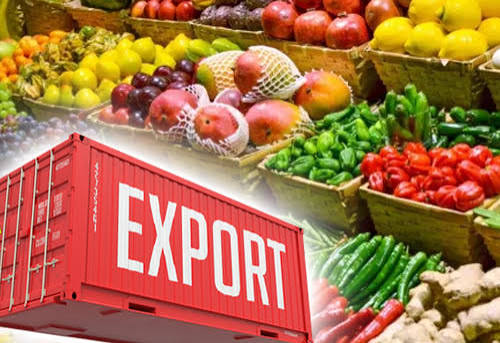
Nigeria’s agricultural imports fell by 8.5 per cent to N2.03 trillion in the first half of 2026, even as the country recorded stronger exports of cocoa, sesame and other farm commodities, pointing to a gradual shift in the agriculture trade balance but continued dependence on foreign food and raw materials.
An analysis of the first and second-quarter Foreign Trade Statistics released by the National Bureau of Statistics (NBS) showed that agricultural imports stood at N827.72 billion in the first quarter and rose sharply to N1.20 trillion in the second quarter.
Despite the second-quarter increase of 45.4 per cent, total imports in the first six months remained below the N2.22 trillion recorded in the corresponding period of 2025.
Agricultural products accounted for 6.08 per cent of total imports in the first quarter, down from 6.71 per cent a year earlier. Their share increased to 8.35 per cent in the second quarter, although the rise was partly driven by the sharp quarter-on-quarter increase in import values.
The decline over the six-month period could provide some relief for Nigeria’s external balance if it reflects stronger domestic production and lower demand for imported agricultural products. However, the data alone does not establish that local production has replaced imports, meaning the improvement could also reflect changes in prices, exchange rates or import demand.
The trade figures nevertheless point to a growing opportunity on the export side.
Nigeria exported substantial volumes of agricultural commodities in the second quarter, led by standard quality cocoa beans valued at N154.31 billion, sesame seeds at N96.03 billion and superior quality cocoa beans at N58.82 billion.
Soya beans excluding seeds added N50.22 billion, while exports of soya bean flour and meals were valued at N36.41 billion. Other notable agricultural exports included cut flowers and flower buds worth N31.43 billion, natural cocoa butter at N27.60 billion and crude shea oil at N12.66 billion.
The figures reinforce the potential of agriculture to contribute more significantly to Nigeria’s non-oil export earnings at a time when the country is seeking to diversify its sources of foreign exchange.
The sector’s importance extends beyond trade. NBS data showed that agriculture, forestry and fishing accounted for 25.34 million jobs in 2023, representing 30.1 per cent of the country’s workforce and making the sector one of the largest sources of employment.
That scale means improvements in farm productivity can have a wider impact on household incomes, rural economic activity and food supply, while stronger agricultural exports can generate foreign exchange and reduce pressure on the naira.
However, the sharp increase in agricultural imports between the first and second quarters also shows how exposed Nigeria remains to supply and price conditions in the international market.
The sector will therefore need sustained investment in irrigation, storage, rural roads, mechanisation, processing and agricultural finance if the decline in import dependence is to become a durable trend rather than a temporary movement.
Capital inflows remain relatively modest compared with the sector’s size. Nigeria attracted $167.25 million in capital importation into agriculture in 2025, despite the sector’s strategic importance to employment, food security and export diversification.
For an economy still grappling with food inflation and pressure on household incomes, the more important test is whether lower agricultural import dependence can be matched by higher domestic production, stronger exports and more affordable food for Nigerians
About The Author