Dangote calls for African capital to stay home as industrial investment tops $50bn
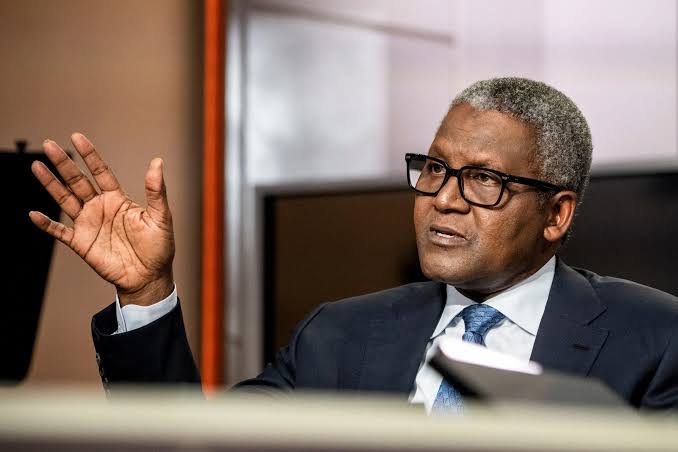
Africa must retain more of its own capital and invest it in industries capable of processing the continent’s resources, creating jobs and capturing greater economic value, President of Dangote Industries Limited, Aliko Dangote, has said.
Dangote made the call at the Global Africa Business Initiative’s Unstoppable Africa 2026 in New York, arguing that the continent would struggle to achieve sustained industrialisation if African savings continued to finance businesses and economies outside Africa.
He said the next stage of Africa’s economic development should be measured not by the volume of natural resources exported, but by the number of industries built to transform those resources into products, jobs and wealth.
The argument comes as Dangote Industries expands a major investment programme estimated at between $46 billion and $50 billion across its businesses under its Vision 2030 strategy.
The Dangote Petroleum Refinery is at the centre of that expansion. The refinery, currently operating at about 700,000 barrels per day, is planned to double its capacity to 1.4 million barrels per day, alongside further investments in petrochemicals and related industries.
Dangote said the refinery demonstrated that African businesses could undertake industrial projects on a scale previously associated largely with multinational corporations.
He also pointed to the company’s planned refinery in Lamu, Kenya, as part of its strategy to build industrial capacity beyond Nigeria. The proposed project, expected to cost about $15 billion to $16 billion, is designed for a capacity of 700,000 barrels per day, with groundbreaking scheduled for September 30.
The Kenyan project illustrates the wider economic argument behind the expansion: industrial investment can create demand for local services, infrastructure, logistics, skills and manufacturing while allowing African countries to retain more value from commodities consumed within the region.
Dangote also linked greater African ownership to the listing of Dangote Petroleum Refinery on the Nigerian Exchange. The N2.15 trillion initial public offering opened last week, offering 4.1 billion shares at N525 each and allowing investors to acquire a stake in the refinery with a minimum subscription of N5,250.
He said public ownership could help keep more of the value generated by major African assets within the continent.
The IPO has already demonstrated the appetite for wider participation. Investor demand was strong enough on opening day to overwhelm some digital investment platforms, exposing both the size of retail interest and the need for stronger financial-market infrastructure to support mass participation.
Dangote said Africa needed to emulate the development strategy of Asian economies, where domestic capital was increasingly channelled into productive businesses and industrial capacity.
The economic challenge is significant. Many African countries export crude oil, minerals and agricultural commodities while importing refined petroleum products, manufactured goods and processed commodities at higher costs.
Greater local processing would therefore allow countries to capture more value from existing resources while creating jobs and reducing dependence on imports.
The Global Africa Business Initiative itself has placed ownership and local value creation at the centre of its 2026 agenda, arguing that the continent’s next phase of growth will depend on who owns and controls the businesses, infrastructure and value chains created from African resources.
For Nigeria, the lesson is particularly relevant. The refinery, petrochemical investments and the push to mobilise domestic savings through the NGX all point towards a model in which capital, production and ownership are increasingly connected within the African economy.
The bigger test is whether other African businesses can replicate that scale, attract long-term capital and build industries that transform the continent from a supplier of raw materials into a producer of higher-value goods.
About The Author