NNPC profit jumps 33% to N7.2trn as revenue falls 24%
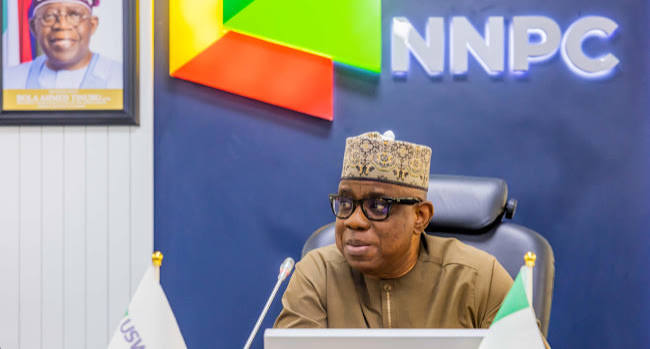
The Nigerian National Petroleum Company Limited (NNPC) increased its profit after tax by 33 per cent to N7.2 trillion in 2025 despite a 24 per cent decline in revenue, highlighting a sharp improvement in profitability and operational efficiency as lower crude prices and petroleum-market deregulation weighed on sales.
The state-owned energy company recorded revenue of N34.5 trillion in 2025, down from N45.1 trillion a year earlier, while profit after tax rose from N5.4 trillion to N7.2 trillion.
The contrasting figures mean NNPC generated significantly more profit from each naira of revenue during the year. Its profit margin increased to about 20.9 per cent in 2025 from approximately 12 per cent in 2024, an improvement of almost nine percentage points.
The results were announced after the company’s Annual General Meeting and its second earnings call with financial and business analysts, according to a statement signed by Chief Corporate Communications Officer, Andy Odeh.
NNPC attributed the revenue decline principally to lower crude oil prices and reduced white-product volumes following the deregulation of the downstream petroleum market in 2024.
The stronger bottom line, however, points to an important shift in the company’s financial performance. Despite generating substantially less revenue, NNPC was able to retain more earnings, suggesting that improved margins and operational performance offset part of the pressure from lower sales.
The development is significant for the wider Nigerian economy because NNPC remains a major player across the oil and gas value chain, with its financial performance closely linked to government revenue, foreign exchange earnings, energy supply and investment in the sector.
A more profitable NNPC could have greater capacity to fund investment in oil and gas production, refining, gas infrastructure and other projects, while also strengthening its ability to meet obligations to the Federal Government.
The result also comes as Nigeria seeks to increase crude production and attract fresh capital into the upstream sector after years of underinvestment and production losses.
NNPC’s latest performance therefore suggests that the company’s transformation into a commercial, profit-driven energy company is increasingly being reflected in its financial results.
The company became commercially oriented under the Petroleum Industry Act, with the government seeking to operate it more like a conventional energy company while retaining its strategic role in Nigeria’s petroleum industry.
The improvement in profit despite lower revenue also underscores the changing economics of Nigeria’s downstream petroleum market following deregulation. With petrol pricing now determined more by market conditions, NNPC is less insulated from fluctuations in volumes and prices than under the previous system.
For consumers, the financial performance carries a different implication. Stronger profitability does not automatically translate into lower petrol prices, particularly when domestic fuel prices remain exposed to crude prices, logistics, exchange-rate movements and refining economics.
NNPC’s ability to convert stronger margins into investment could, however, have a longer-term impact on energy security if additional capital is directed towards increasing domestic production and refining capacity.
The company has previously outlined an investment pipeline of about $60 billion across the upstream, midstream and downstream segments through 2030, alongside targets to raise crude production to two million barrels per day by 2027 and three million barrels per day by 2030.
The 2025 results consequently present a notable change in NNPC’s financial profile: a company generating less revenue but substantially more profit.
The sustainability of that improvement will depend on whether NNPC can maintain stronger margins while increasing crude and gas production, expanding refining capacity and deploying its earnings into investments capable of generating more reliable energy supply and foreign exchange for Nigeria.
About The Author