FG Needs N4.55bn to Recruit 122,696 Health Workers
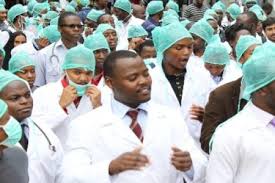
The Federal Government says it requires an estimated N4.55 billion over the next three years to recruit 122,696 health workers needed to fill vacant positions in Primary Health Care (PHC) facilities across 26 states.
The Human Resource for Health and Project Management Lead at the Sector-Wide Approach (SWAp) Coordination Office, Zaiyanatu Umar, disclosed this on Friday during the 15th Expanded Ministerial Oversight Committee meeting on national healthcare implementation in Abuja.
According to Umar, the estimate was derived from baseline data submitted by 26 verified states, which assessed staffing levels against the national Minimum Staffing Standards for Primary Health Care facilities under the SWAp recruitment assessment exercise.
She explained that the exercise was conducted to support the World Bank-backed HOPE-GOV Programme, particularly Disbursement-Linked Indicator (DLI) 5.2, which focuses on strengthening the availability and quality of healthcare workers across the country.
She added that participating states have an average of 7.5 PHC workers per 10,000 population, with 55.6 per cent of required positions remaining vacant.
According to the findings, the South-East recorded the most severe shortage, with a 73 per cent staffing gap and just 1.9 health workers per 10,000 population. The North-West followed with a 70.9 per cent deficit and 5.8 workers per 10,000 population, while the South-West posted a 59.3 per cent staffing gap.
The North-Central recorded a 49.5 per cent workforce deficit, averaging eight health workers per 10,000 population. The South-South had a 46.8 per cent shortage, while the North-East recorded the lowest gap at 33.9 per cent.
Umar noted that the calculations excluded 13 states, adding that the Performance Management Task Team was finalising a Human Resource for Health scorecard to improve accountability and workforce performance.
Also speaking, the National Emergency Medical Treatment Committee Coordinator, Dr Emuren Doubra, said the Federal Government had disbursed N2.41 billion to states and federal tertiary hospitals for emergency medical interventions since 2023, benefiting more than 130,000 patients.
He disclosed that the National Emergency Medical Services and Ambulance System released an additional N1.49 billion to tertiary health institutions between January 2023 and May 2026.
According to Doubra, the government plans to expand emergency medical services from 32 states to all 36 states and the Federal Capital Territory, while increasing Rapid Emergency Services and Medical Ambulance Teams coverage from 139 to 172 local government areas before the end of the year.
He revealed that Nigeria was allocated 791.6 million dollars under Grant Cycle Eight, down from 933.1 million dollars received under the current Grant Cycle Seven.
Tajudeen said the reduction had prompted reforms aimed at improving efficiency, eliminating duplication and strengthening the integration of HIV, tuberculosis and malaria programmes.
He added that Nigeria had reduced the number of principal grant recipients from seven to five to improve coordination, accountability and government ownership.
According to him, 42.8 million dollars from disease-specific allocations has been earmarked for health systems strengthening over the next three years, with investments targeted at health insurance expansion, supply chain improvements, local pharmaceutical manufacturing, laboratory services, disease surveillance and community health systems.
The Basic Health Care Provision Fund remains the Federal Government’s flagship financing mechanism for expanding access to quality primary healthcare and advancing Universal Health Coverage across the country.
About The Author