FG floats N729bn bond to cut power sector debt
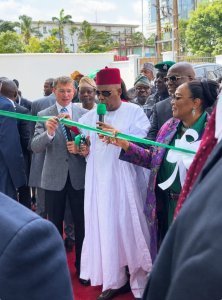
The Federal Government has launched a N729 billion bond under the second series of its Presidential Power Sector Debt Reduction Programme, extending efforts to clear verified legacy debts in the electricity sector and restore the financial viability of Nigeria’s power market.
The latest issuance, unveiled by the Nigerian Bulk Electricity Trading (NBET) Plc at an investors’ forum in Abuja organised alongside CardinalStone, follows the deployment of about N501 billion under the first series in February 2026. The initial phase comprised N300 billion in cash and N201 billion in non-cash bond instruments used to settle part of outstanding obligations owed to electricity generation companies (GenCos).
With the new issuance, the government is seeking to accelerate payments to GenCos, gas suppliers and other service providers, while addressing the liquidity constraints that have undermined electricity generation, investment and service delivery across the power value chain.
The initiative forms part of the Federal Government’s N4 trillion Power Sector Debt Reduction Programme, under which verified liabilities were reduced from more than N4 trillion to about N3.3 trillion following a comprehensive line-by-line validation exercise.
Special Adviser to the President on Energy, Olu Verheijen, said the successful execution of the first phase had strengthened investor confidence by demonstrating the government’s commitment to honouring its obligations.
“Markets do not reward promises; they reward performance. Capital follows credibility,” Verheijen said.
Minister of Finance and Coordinating Minister of the Economy, Wale Edun, represented by the Chairman of the Presidential Fiscal Policy and Tax Reforms Committee, Taiwo Oyedele, said that consistent execution of government commitments would lower financing costs and improve private-sector confidence.
“Investors do not reward intentions; they reward execution. Every commitment honoured today reduces the cost of capital tomorrow,” Oyedele said.
Minister of Power, Joseph Tegbe, described the debt reduction programme as a critical economic reform aimed at repositioning the electricity market on a commercially sustainable footing.
“Our destination is clear: a financially sustainable, investment-led electricity market that powers Nigeria’s industrial renaissance,” he said.
According to Verheijen, the second bond issuance is expected to deepen market liquidity and strengthen the financial foundation required to attract long-term private investment into the power sector.
Providing details of the maiden issuance, Head of Investment Banking at CardinalStone, Onyebuchim Obiyemi, disclosed that pension fund administrators invested about N150 billion of the N300 billion cash tranche, while commercial banks accounted for approximately 41.5 per cent of subscriptions. Asset managers contributed N17 billion, representing about 5.8 per cent of the offer.
She said the organisers were targeting broader participation from insurance companies, asset managers, family offices and other institutional investors in the second issuance.
Obiyemi added that the inaugural seven-year bond was priced at 17.5 per cent.
Under the first phase of the programme, N333 billion has already been disbursed to eight generation companies covering 17 power plants, while the first coupon payment of about N63.5 billion was settled in full on July 14, 2026.
The government said prompt settlement of the obligations had enabled participating GenCos to meet outstanding commitments to gas suppliers, lenders and operations and maintenance contractors, easing financial pressure across the electricity value chain.
Officials said the N729 billion bond would complete the first phase of the debt settlement programme and expand payments to more participants, reinforcing broader reforms aimed at improving electricity supply, attracting long-term private capital and creating a financially sustainable power sector.
About The Author