Nigeria’s FX forwards rise 264% as weekly dollar trading falls 45%
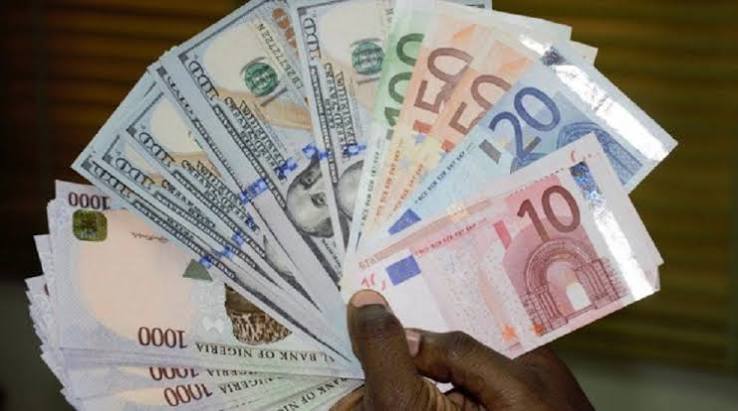
Nigeria’s foreign exchange market recorded a sharp shift towards forward transactions last week as FX Forwards turnover surged 263.56 per cent to $90.89 million, even as total FX market turnover fell 44.90 per cent to $2.055 billion, driven by a steep decline in spot trading.
The latest weekly turnover report from FMDQ Exchange showed that overall FX activity dropped by about $1.675 billion from $3.729 billion in the previous week, while average daily turnover declined to $461.40 million from $745.89 million.
The contrasting movements in the two segments point to a change in market activity, with participants appearing to undertake more transactions for future currency delivery even as immediate foreign exchange settlement weakened significantly.
FX Spot turnover, which remains the dominant segment of Nigeria’s currency market, fell 46.98 per cent, or about $1.74 billion, to $1.96 billion from $3.70 billion the previous week.
Spot transactions accounted for 95.58 per cent of total market turnover during the week.
By contrast, FX Forwards turnover increased by about $65.89 million, from roughly $25 million to $90.89 million, lifting its share of total FX activity to 4.42 per cent.
The entire increase in the derivatives segment came from FX Forwards, with no meaningful contribution from other derivative instruments.
The sharp increase in forwards activity suggests that some market participants may be placing greater emphasis on managing future foreign exchange exposure rather than settling transactions immediately at prevailing spot rates.
For businesses exposed to currency movements, forward contracts can provide a way to lock in exchange rates for future transactions and reduce uncertainty around the naira value of future dollar payments or receipts.
However, the size of the derivatives market remains relatively small despite last week’s sharp increase.
The $90.89 million in forward transactions represented only 4.42 per cent of total weekly FX turnover, underscoring the continued dominance of spot transactions and the relatively limited use of hedging instruments in Nigeria’s currency market.
The pattern is similar to the week ended July 24, when FX Forwards turnover also jumped sharply by 333.59 per cent, although that increase occurred alongside strong spot-market activity and total turnover reached about $4.4 billion.
The latest figures therefore appear more significant because the forwards surge coincided with a substantial contraction in spot trading.
The nearly $1.74 billion weekly fall in spot turnover suggests that immediate demand for foreign exchange may have eased after the unusually strong activity recorded in the previous week.
The latest movement also reinforces the volatility of Nigeria’s FX market, where weekly turnover has recently swung by more than 40 per cent in either direction.
For banks, corporates and investors, greater use of forward contracts could gradually deepen Nigeria’s foreign exchange market by providing more tools to manage exchange-rate risk.
But for that to happen, derivatives turnover will need to expand beyond occasional spikes and become a more substantial part of daily market activity.
For now, the data show a market still overwhelmingly dependent on spot transactions, with the latest surge in forward trading representing a potentially important shift in behaviour but not yet a structural transformation of Nigeria’s FX market.
About The Author