Nigeria’s $410bn energy transition risks creating new inequalities
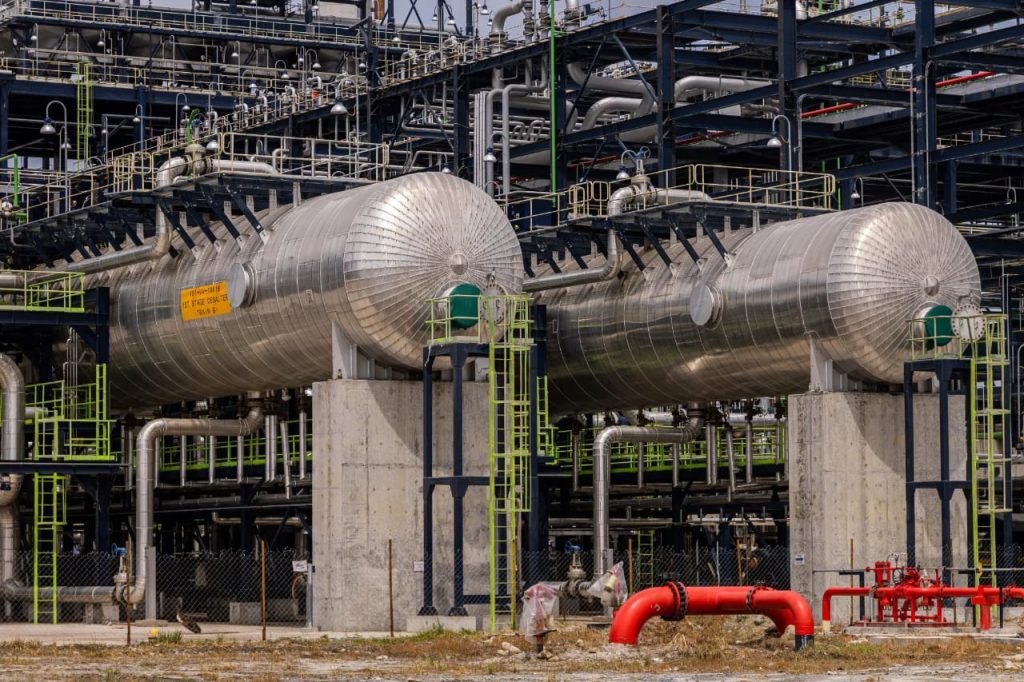
Nigeria’s planned $410 billion energy transition could deepen inequality and shift environmental and economic costs onto vulnerable communities unless the Federal Government strengthens land rights, local participation, compensation and domestic value creation, a new study has warned.
The warning comes as Nigeria seeks to expand renewable energy, improve electricity access and reduce dependence on fossil fuels under its Energy Transition Plan (ETP), which targets universal energy access by 2030 and net-zero emissions by 2060.
The transition pathway envisages deploying about 5.3 gigawatts of solar capacity annually until 2060, alongside other low-carbon technologies. The World Bank-backed DARES programme is also expected to provide new or improved electricity access to more than 17.5 million Nigerians through distributed renewable-energy solutions.
However, a study published by Cambridge University Press, titled “Energy justice in practice: Non-economic impacts of Nigeria’s renewable energy transition,” found that the transition could reproduce some of the inequalities associated with Nigeria’s fossil-fuel economy.
The researchers interviewed 10 experts drawn from government, private energy companies, civil society, international organisations and other parts of the energy sector.
Lead researcher Excel Obumneme Amaefule, a researcher at SOAS University of London and founder of Eden Resilience Action Lab, said renewable projects were already producing mixed outcomes, with some communities gaining improved electricity access, longer business hours and lower air pollution while others were bearing poorly documented social and economic costs.
“What we found in our research is that Nigeria’s energy transition is generating real benefits for some communities, improved lighting, extended business hours, reduced air pollution, but simultaneously producing serious and poorly documented harms for others. Land is being taken for solar installations without adequate compensation,” Amaefule said.
The study found that reparative justice accounted for only 26 per cent of its possible maximum across Nigeria’s eight principal energy-transition policy documents, pointing to significant gaps between policy commitments and the mechanisms available to address past and emerging harm.
The researchers assessed the transition across four dimensions of energy justice, procedural, distributional, recognitional and restorative.
Procedural justice requires communities to participate meaningfully in decisions affecting them. The study found that community participation was often late, top-down and superficial, with policies frequently developed at the federal level without sufficient grassroots consultation.
Amaefule said the pattern risked repeating the structure of Nigeria’s oil economy, where land and natural resources generate value externally while local communities absorb much of the social and environmental cost.
“The transition to renewable energy in Nigeria is happening on top of unresolved injustices, not after them,” he said.
The study also highlighted the growing role of critical minerals in the energy transition, warning that extraction in states such as Zamfara and Plateau could replicate the pattern of exporting raw resources for processing elsewhere while retaining little of the higher-value economic activity domestically.
The issue reflects a wider question around who captures the economic gains from Nigeria’s shift to renewable energy.
While the transition is expected to attract billions of dollars in investment and expand electricity access, weak local participation could limit the number of jobs, businesses and skills created within communities hosting renewable-energy projects.
The study cited the experience of the Katsina wind farm as a warning, noting that about $4 billion was invested before the project was abandoned, leaving communities that had participated in construction and employment without the expected long-term benefits.
The researchers said the experience demonstrated the risks of projects being assessed primarily by the capital deployed rather than their durability, local economic impact and ability to deliver lasting benefits.
The study also found a gap between policy and implementation. While 70 per cent of the experts said justice principles were referenced in Nigeria’s energy-policy documents, all 10 said they had observed energy injustices during actual project deployment.
The report therefore calls for earlier and more meaningful community participation, stronger regulation of renewable-energy waste including solar panels and batteries, and better systems for restoring livelihoods when communities are displaced.
It also recommends stronger local-content requirements to encourage domestic assembly, maintenance and skills transfer, alongside tighter regulatory enforcement, independent compliance audits and public data on land acquisition, project longevity and community compensation.
For Nigeria, the economic stakes are substantial. The energy transition is intended to attract investment, expand electricity access, create jobs and reduce dependence on fossil fuels, but its long-term success will depend on how much of the value generated remains within Nigeria and how equitably the costs and benefits are distributed.
The central challenge is therefore no longer simply how much renewable capacity Nigeria can install or how much climate finance it can attract.
It is whether the country can build a clean-energy economy that delivers electricity and investment without reproducing the exclusion, weak local value capture and unresolved community grievances associated with its extractive past.
About The Author