From ₦1.23trn EFCC recoveries to tax reform: Can Nigeria finally turn reform into prosperity?
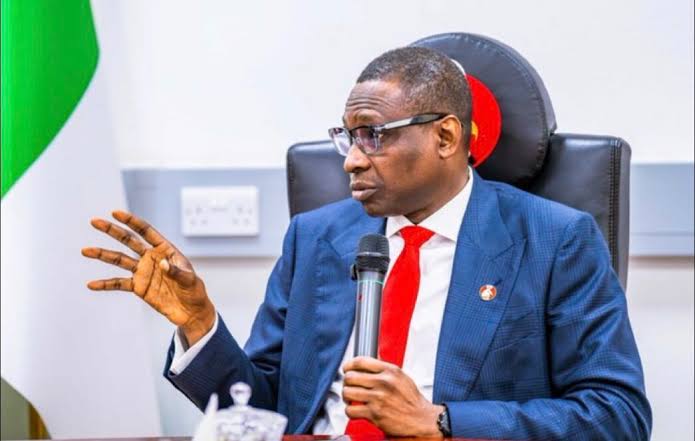
For much of Nigeria’s economic history, reform has come with a familiar promise: sacrifice today for prosperity tomorrow.
That promise has travelled through generations. Nigerians heard it during the Structural Adjustment Programme, through years of austerity, during privatisation and banking reforms, throughout the long debate over fuel subsidies and, most recently, as the government embarked on sweeping reforms of the foreign-exchange, fiscal and tax systems.
But after decades of adjustment, restructuring and reform, Nigerians are increasingly asking a more difficult question: when is tomorrow?
The central issue has remained remarkably consistent. Nigeria has repeatedly demonstrated an ability to generate resources, undertake reforms and produce periods of economic expansion. What has proved much harder is ensuring that the benefits of those changes become visible in the daily lives of ordinary citizens.
A century of reform
Nigeria’s economic history is, in many respects, a history of attempts to correct structural weaknesses.
When oil revenues collapsed and external pressures mounted, government turned to Structural Adjustment. When the financial system became fragile, banking reforms followed. When state-owned enterprises became inefficient, privatisation was pursued. When public finances weakened, fiscal reforms were introduced. When fuel subsidies became increasingly difficult to sustain, governments debated and eventually moved towards their removal. When foreign-exchange distortions intensified, the exchange-rate framework was repeatedly adjusted.
The current administration has now embarked on another major reset, arguing that the reforms are necessary to prevent deeper macroeconomic instability and restore the foundations for sustainable growth.
International institutions have broadly acknowledged the progress. The International Monetary Fund (IMF) said in June that reforms undertaken over the preceding three years had improved Nigeria’s macroeconomic outcomes and strengthened resilience.
But the Fund also highlighted the difficult social reality surrounding that progress. That tension is the story.
Nigeria can improve its macroeconomic position while households continue to struggle with the cost of food, transport, housing, education and healthcare. Government can collect more revenue while businesses complain about the cost of operating. Foreign reserves can rise while manufacturers remain concerned about financing and power.
The real question, therefore, is not whether reform is producing results. It is whether those results are reaching the people for whom reform is supposed to matter.
The numbers versus the street
On paper, Nigeria’s economic picture is becoming more encouraging. In fact, growth has returned to around four per cent. Inflation has fallen significantly from its earlier peak. Foreign-exchange conditions have improved, external reserves have strengthened, crude oil production has recovered, and government revenue has increased. Investor sentiment has also improved in important areas of the economy.
Yet, walk through a Nigerian market and another story can quickly emerge.
Food remains expensive. Transport continues to absorb a large share of household income. Rent is increasingly difficult for many families to afford. School fees and healthcare costs continue to put pressure on disposable income, while small businesses still struggle with energy, financing and operating costs.
The IMF estimated that 63 per cent of Nigerians were living in poverty at the national poverty line in 2025, while about 27 million people faced food insecurity during the latter part of that year.
Those figures explain why macroeconomic reform cannot be declared successful simply because the headline indicators have improved.
A stronger naira market, higher reserves or improved fiscal performance can create the conditions for recovery, but they do not by themselves put food on a household table or create a productive job.
The distance between macroeconomic statistics and household experience is therefore becoming one of the most important questions in Nigeria’s reform story.
The EFCC dimension
The latest scorecard from the Economic and Financial Crimes Commission (EFCC) provides another window into the same question: what happens to the wealth recovered by government institutions?
Between October 2023 and July 2026, the EFCC said it received 49,673 petitions, investigated 39,615 cases, filed 14,476 cases and secured 10,872 convictions.
More striking was the scale of financial recovery. The Commission reported recovering ₦1.233 trillion, alongside hundreds of millions of dollars and other foreign currencies. It also said ₦661.32 billion and $492.37 million were released to beneficiaries during the period, while approximately ₦288.1 billion in federal and state tax recoveries was recorded.
More than 10,000 tangible assets were also forfeited. But the most economically important part of the recovery story is what happens after the money and assets are recovered.
If recovered resources simply sit in government accounts, the economic effect is limited. Their real value emerges when they are converted into productive assets, public services, infrastructure, education, credit or other investments that generate economic value.
The conversion of NOK University into the Federal University of Applied Sciences, Kachia, Kaduna State, offers one illustration of what that transformation can mean. The institution matriculated 1,909 students in December 2025.
That is where anti-corruption becomes economic policy. A recovered property can become a productive institution. A recovered naira can support education. Recovered tax liabilities can become public revenue. A forfeited asset can be deployed in a way that generates value for society.
That is the broader economic meaning Nigerians should demand from the fight against corruption. Not simply arrests and convictions. But economic restoration.
The missing link: Productivity
Nigeria’s biggest economic challenge is no longer simply generating reforms. It is making those reforms increase productivity.
Productivity is what happens when a farmer produces more from the same hectare, when a manufacturer gets more output from the same machinery, when a worker earns more because his skills generate greater value and when a business becomes capable of exporting rather than merely surviving on domestic demand.
It is also what happens when electricity allows a factory to operate reliably, when roads and ports reduce logistics costs, when digital systems reduce the time needed to register a company or complete a transaction and when capital flows into productive enterprises rather than remaining concentrated in short-term or speculative activities.
This is the missing bridge between reform and prosperity.
Nigeria can stabilise its currency without becoming more productive. It can increase government revenue without increasing industrial output. It can recover billions through anti-corruption agencies without changing the productive capacity of the economy.
The success of reform ultimately depends on what those improvements enable the economy to produce.
Why growth alone is insufficient
Nigeria has experienced periods of strong Gross Domestic Product (GDP) growth without eliminating poverty, because GDP measures aggregate economic activity rather than the distribution of the benefits generated by that activity.
A country can grow while inequality increases. Businesses can record higher nominal revenues while households lose purchasing power. Government revenue can rise while citizens continue to complain about poor public services. Financial-market capitalisation can increase while millions of informal businesses remain unable to access affordable finance.
The latest GDP numbers illustrate the distinction.
Nigeria’s real economy grew by 4.43 per cent in the second quarter of 2026, but nominal GDP increased by 18.43 per cent to ₦119.29 trillion. The enormous gap between the growth in nominal economic value and the growth in real output is a reminder that the naira value of the economy can rise much faster than the actual quantity of goods and services being produced.
More revealing is the uneven structure of that growth. For instance, agriculture expanded by 4.39 per cent, services by 4.60 per cent and the non-oil sector by 4.31 per cent. But industry grew by only 3.96 per cent, down significantly from 7.46 per cent a year earlier.
Even more troubling, the power sector contracted by 10.63 per cent in real terms in Q2, following a 15.30 per cent contraction in Q1. That is why growth alone cannot be the final measure of reform.
The more important question is whether growth is strengthening the sectors that can create jobs, expand production, lower costs and improve household incomes.
The subsidy lesson
The removal of the petrol subsidy illustrates the complexity of economic reform better than almost any other policy decision.
Economically, subsidy removal addresses a fiscal distortion and changes how public resources are allocated. But for households, petrol is not simply a petroleum product. It affects transport costs, food distribution, electricity for small businesses, logistics and ultimately inflation.
This is why a policy that appears rational on a government spreadsheet can be painful in a household budget.
The challenge for government, therefore, is not simply to make difficult decisions. It is to build the institutions and economic conditions that enable citizens to withstand the adjustment.
That means creating a stronger public transport system, expanding food production, improving healthcare and education, widening access to affordable credit, creating productive jobs and investing in infrastructure that reduces the private cost of living and doing business.
Without those cushions, necessary reforms can become socially unsustainable.
Tax reform and the social contract
The new tax regime presents another major test of Nigeria’s reform agenda.
Government needs revenue to finance public goods and reduce dependence on borrowing. Businesses need a predictable tax system that encourages investment rather than discouraging it. Citizens, meanwhile, need evidence that taxes are being converted into services and infrastructure.
The 2025 tax reforms, which took effect from January 2026, introduced a new framework aimed at modernising tax administration, improving compliance and broadening the revenue base. The reforms also increased the threshold for small companies qualifying for important tax exemptions.
For SMEs, that could become an important incentive for formalisation and growth.
But tax reform will gain public legitimacy only if Nigerians can see the relationship between what they pay and what they receive.
That is the social contract at the heart of taxation.
People are more willing to pay taxes when they believe their money is being used efficiently, transparently and productively. Businesses are more willing to comply when the system is predictable and when public infrastructure lowers rather than increases their operating costs.
The success of the new tax regime will therefore depend as much on governance as on the technical quality of the legislation.
From recovered wealth to shared prosperity
The most important question surrounding Nigeria’s current reform cycle is now becoming clear. Can government convert improved revenue, stronger reserves, recovered assets, better tax collection and economic growth into a productive economy that raises household incomes?
The opportunity exists. Because Nigeria has a large consumer market, enormous human capital, substantial energy resources, an increasingly sophisticated financial system and a private sector that has demonstrated extraordinary resilience.
But these advantages will remain underutilised unless the cost of producing in Nigeria falls. That requires reliable electricity, predictable foreign exchange, affordable long-term credit, efficient transport infrastructure, reasonable taxation and regulatory consistency.
It also requires government to look beyond the collection of revenue towards the productivity of every naira collected. The ₦1.233 trillion recovered by the EFCC is important. So are higher tax receipts, stronger reserves and improved GDP growth.
But their true significance will be measured by what they make possible. If recovered resources produce schools, infrastructure, productive enterprises and jobs, their economic value multiplies.
If higher tax revenue produces better roads, reliable power and efficient public services, businesses become more competitive. If stronger reserves support currency stability and investor confidence, capital can return to productive sectors.
And if GDP growth is driven increasingly by manufacturing, agriculture, construction and high-value services, the economy begins to generate the incomes necessary for durable prosperity. That is the bridge Nigeria has struggled to build for a century.
The reform test for the next century
One hundred years of economic history have taught Nigeria an important lesson: reform is not an event.
It is a process.
A policy can be economically correct and socially painful. A reform can improve a balance sheet without immediately improving a household. A recovery can appear strong in national accounts while remaining fragile in the marketplace.
The success of the current reform programme will therefore not be determined simply by whether inflation falls, reserves rise, revenue increases or GDP grows.
The final test is whether productivity rises; whether businesses can expand; whether workers can earn more; whether food becomes more affordable; whether infrastructure reduces the cost of production; whether recovered public wealth becomes productive capital. And whether a larger economy finally becomes a more prosperous society.
That is why the question confronting Nigeria after a century of economic experimentation is no longer simply whether government can reform the economy.
Nigerians are justified in asking for more than promises about tomorrow. They are asking to see tomorrow in the economy they live in today.
About The Author