Nigeria’s business pulse hits six-month high at 112.7 as manufacturing leads recovery
With Nigeria’s business performance reaching its strongest level in six months, enterprises across manufacturing, agriculture and services are showing renewed momentum despite persistent pressures from energy costs, financing constraints, weak infrastructure and other challenges confronting production. The latest figures point to a business environment gradually regaining strength, but the deeper question is whether improving confidence can translate into stronger investment, higher productivity, job creation and more durable economic growth. This examines the numbers behind the recovery and what they mean for Nigerian businesses and the wider economy.
Nigeria’s business environment strengthened further in August 2026, with the composite Current Business Performance Index (CBPI) rising to 112.7 points, from 108.6 points in July, marking its highest level since February and reinforcing evidence that economic activity is gradually gaining momentum.
The latest reading by the Nigerian Economic Summit Group (NESG) was also stronger than the 107.3 points recorded in August 2025, indicating that business conditions have improved not only month-on-month but also compared with the same period last year.
The August performance is significant because the improvement was broad-based, with manufacturing emerging as the strongest-performing sector while agriculture remained resilient and services continued their recovery.
Behind the headline number, however, is a more complicated picture of an economy in transition. Businesses are reporting stronger demand, improved financial results, better cash flow, stronger exports and rising employment, but investment remains in contraction, and the cost of doing business continues to weigh heavily on expansion.
The figures therefore suggest that Nigerian businesses are becoming more active before they have become fully confident about committing capital to long-term expansion.
Manufacturing leads the rebound.d
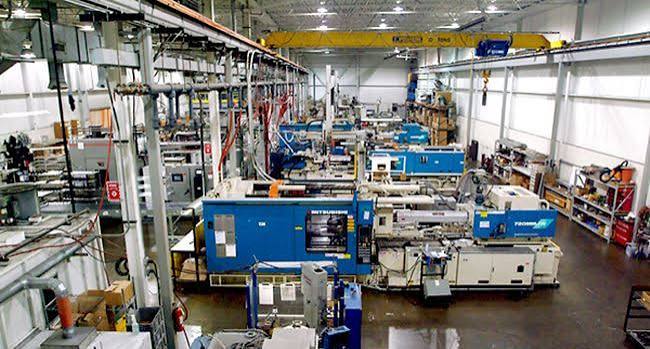
The manufacturing sector provides the clearest evidence of the renewed momentum. Its CBPI jumped to 120.4 points in August from 110.5 points in July, and was significantly above the 106.2 points recorded a year earlier.
The improvement was led by the Food, Beverage and Tobacco and Chemical and Pharmaceutical Products subsectors, pointing to stronger activity in industries with extensive links to household consumption and domestic supply chains.
The rise is particularly important because manufacturing remains one of the sectors most exposed to Nigeria’s structural business constraints. The NESG said manufacturers continued to face high operating costs caused by unreliable electricity, shortages of raw materials, expensive rents and limited access to financing.
The latest numbers therefore suggest that manufacturers are finding room to increase activity despite these pressures, rather than indicating that the underlying constraints have disappeared.
For the wider economy, a sustained manufacturing rebound would be particularly valuable because stronger factory activity can generate employment, increase demand for local raw materials, deepen supply chains and create opportunities for exports.
Agriculture remains a dependable growth base.
Agriculture also maintained its resilience, with the sector’s CBPI standing at 110.5 points in August, only marginally below the 110.8 points recorded in July but substantially higher than the 95.6 points recorded a year earlier.
Livestock and fishing posted stronger activity, while crop production remained at elevated levels. Agro-allied activity eased slightly but remained in expansion, although forestry weakened to the 100-point neutral level.
The resilience of agriculture matters beyond the sector itself because stronger agricultural production can support food supply, rural incomes and the availability of raw materials for processing and manufacturing.
The bigger opportunity lies in strengthening the connection between farms and factories so that growth in primary production translates into greater domestic processing, industrial output and export earnings.
Services regain momentum
Services also continued to recover, with the CBPI rising to 112.4 points from 108.3 points in July, compared with 103.7 points a year earlier.
Broadcasting, real estate and professional, scientific and technical services recorded stronger expansion, while telecommunications and information services returned to growth after contracting in July.
Financial institutions remained firmly in expansion, although activity moderated compared with the previous month.
The recovery in services is significant because the sector has become one of the main engines of Nigerian economic activity. Stronger services output can support household consumption, business activity and employment while providing critical support to other parts of the economy through finance, telecommunications, digital infrastructure and professional services.
Businesses are selling more, but investing less.s
One of the most revealing elements of the NESG report is the gap between current business performance and investment behaviour.
General business conditions, demand, exports, financial results, access to credit, cash flow and employment all strengthened in August. Production, operating profit and supply orders also remained in expansion.
Yet investment remained in contraction, although it improved from the previous month.
That distinction is critical.
A company can experience stronger demand without being confident enough to construct another factory. It can record better cash flow without taking on long-term debt for expansion. It can increase production using existing capacity while postponing major capital expenditure.
Nigeria therefore appears to be at an important intermediate stage of recovery: businesses are becoming more active, but many have yet to move from improved short-term performance to full confidence in long-term investment.
Stockpiling signals firmer consumer demand
Another positive development was the sharp rise in the trade stockpiling index.
Businesses accumulated more inventories ahead of back-to-school shopping as consumer demand remained firm.
That indicates that companies were willing to commit additional working capital to inventories because they anticipated stronger sales.
Inventory accumulation can have a wider multiplier effect if higher stock levels lead manufacturers to increase production and distributors to move more goods through the economy.
It is therefore an important sign that stronger business activity may increasingly be supported by consumer demand rather than solely by corporate adjustments.
Cost pressures remain the big weakness
The recovery, however, has not eliminated the cost pressures facing Nigerian businesses.
The NESG Cost of Doing Business Index stood at 56.7 points, while the Prices sub-index was 58.7 points, both below the 100-point neutral benchmark.
The readings indicate that the burden associated with operating costs and prices remains significant even as business activity improves.
For manufacturers, this pressure is reflected in energy costs, raw-material shortages, logistics, rent and financing. For SMEs, the problem can be even more acute because smaller enterprises typically have less financial capacity to absorb cost shocks.
For consumers, higher business costs eventually feed into retail prices, meaning that a stronger business environment will have limited welfare benefits unless productivity rises sufficiently to contain the cost of goods and services.
Confidence is improving, but not yet complete
The outlook for the coming months is nevertheless encouraging.
The NESG Future Business Expectation Index rose to 129.3 points in August from 128.3 points in July, suggesting that businesses expect operating conditions to improve further over the next one to three months.
The result is supported by other business surveys.
Stanbic IBTC’s August PMI showed Nigeria’s private sector recording its greatest improvement in business conditions in 29 months, while the Central Bank of Nigeria’s Composite PMI rose to 52.7 points from 51.1 points in July, representing a third consecutive month of expansion.
The convergence of these indicators is important because it suggests that the improvement is not isolated to a single survey or sector.
Instead, several independent indicators are pointing towards stronger economic momentum.
GDP growth gives the recovery a wider context
The August business figures also fit into the broader economic recovery reflected in Nigeria’s national accounts.
The National Bureau of Statistics reported that real GDP grew by 4.43 per cent year-on-year in Q2 2026, up from 4.23 per cent in Q2 2025.
Agriculture expanded by 4.39 per cent, services by 4.60 per cent and the non-oil economy by 4.31 per cent. Industrial growth, however, slowed significantly to 3.96 per cent.
The relationship between GDP and the NESG’s business-performance index is important. GDP measures actual economic output, while the CBPI provides an indication of how businesses are experiencing current conditions and what they expect in the immediate future.
The August numbers suggest that business confidence is beginning to reinforce the wider GDP recovery, but the weakness in investment and persistent cost pressures show why the recovery remains unfinished.
The productivity test
The next stage of Nigeria’s recovery must be about productivity.
Stronger business sentiment will matter far more if companies use the improvement to invest in technology, machinery, skills, production capacity and new markets.
For that to happen, the operating environment must become significantly more supportive.
Businesses need reliable electricity, more predictable foreign exchange, affordable financing, efficient logistics, stable taxation and regulatory consistency. Without those conditions, stronger demand can simply produce higher turnover without generating the investment and productivity gains needed for sustainable growth.
That challenge is particularly pressing in manufacturing, where the country needs to transform a rise in business activity into greater productive capacity.
The 120.4 manufacturing CBPI is encouraging, but Nigeria will gain much more from that improvement if it ultimately translates into new factories, expanded production lines, increased employment and stronger exports.
Agriculture faces a similar challenge. Rising output must be connected to processing, storage and industrial value chains if the sector is to generate broader economic transformation.
Services, meanwhile, must increasingly become an enabler of productivity across the rest of the economy rather than simply a fast-growing component of GDP.
From better sentiment to stronger investment
Nigeria’s August business figures provide a credible reason for optimism.
A 112.7 CBPI, a 120.4 manufacturing reading, a 112.4 services index and a 129.3 future expectation index all point to a business environment that is regaining momentum.
But the story is not yet complete.
The most important missing piece is investment.
Businesses must become confident enough to commit capital to long-term expansion. Without that transition, Nigeria risks having an economy in which companies become busier without becoming substantially more productive.
The opportunity is now to ensure that the current improvement in business conditions becomes a platform for deeper industrialisation, stronger private-sector investment, more jobs and higher household incomes.
The August report therefore offers both an encouraging signal and a warning.
Nigeria’s businesses are recovering. The task now is to make sure the recovery becomes investment, investment becomes productivity, and productivity becomes broad-based economic growth.
About The Author